
News
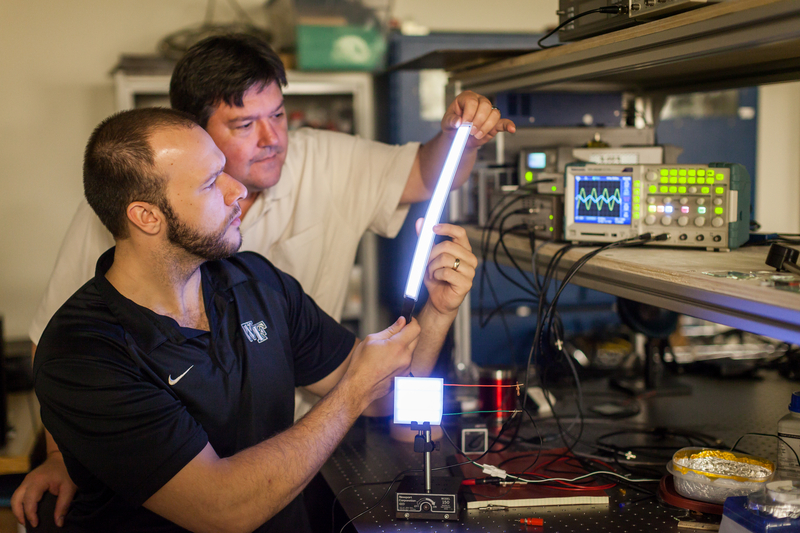
Taking the buzz out of office lights
December 3, 2012 | 2012 Highlights: Science and Research, Faculty, For Alumni, For Parents, Research, Student, Top Stories
Say goodbye to that annoying buzz created by overhead fluorescent light bulbs in your office or residence hall. Wake Forest scientists have used nanotechnology to develop a flicker-free, shatterproof alternative for large-scale lighting.
News
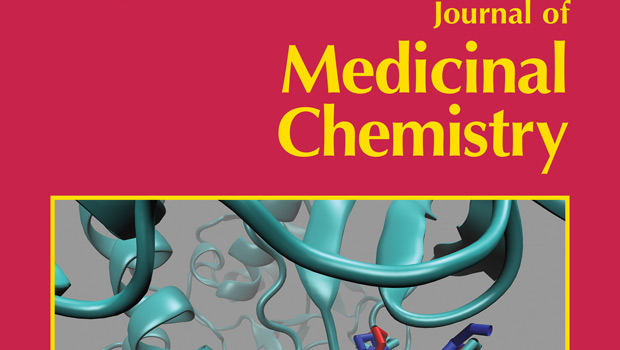
Cancer research sparks cover story
November 28, 2012 | 2012 Highlights: Science and Research, For Alumni, For Parents, Recognition, Research, Top Stories, Wake Forest College
The work of an interdisciplinary team of Wake Forest researchers developing a novel drug for prostate cancer treatment is featured on the cover of the Nov. 26 issue of the Journal of Medicinal Chemistry.
News
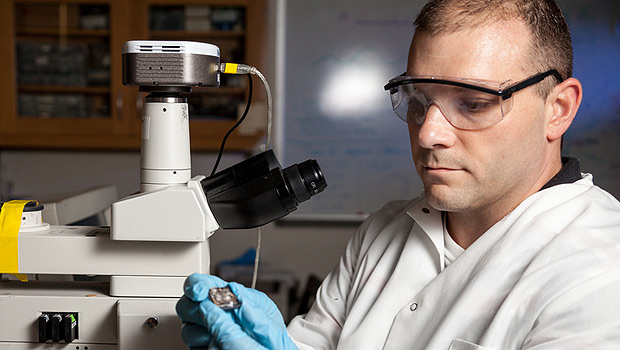
A Google search for drug discovery
October 31, 2012 | 2012 Highlights: Science and Research, Faculty, For Alumni, For Parents, Research, Top Stories, Wake Forest College
Wake Forest researchers received a $700,000 grant from the National Institutes of Health to bring to market a new drug-discovery tool using next-generation genetic sequencing. Someday, pharmaceutical companies will use their technology as a sort of Google search for new drugs, making diagnostics discovery significantly more efficient.
News
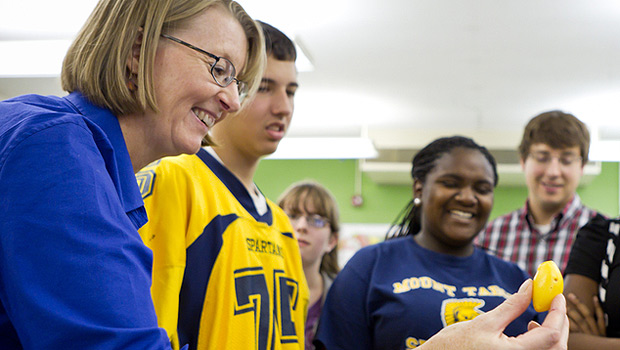
Teaching with tomatoes
October 15, 2012 | 2012 Highlights: Science and Research, Community, Faculty, For Alumni, For Parents, Research, Top Stories
The “Teaching with Tomatoes” program developed by biology professor Gloria Muday takes WFU students to local schools to teach genetics. They reinforce lessons learned in class about how genetics are responsible for the diversity in heirloom tomatoes. Muday estimates the program has reached more than 1,200 students this semester.
News
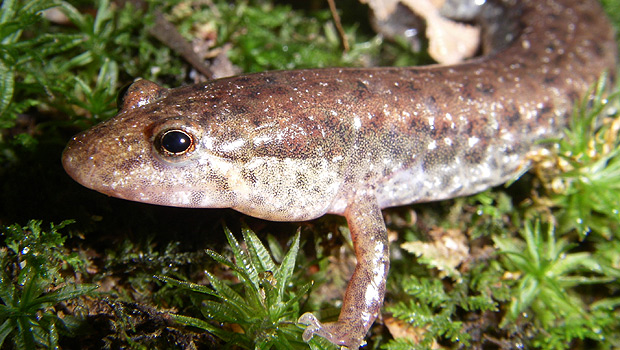
Drought, climate change impact salamanders
October 12, 2012 | 2012 Highlights: Science and Research, Faculty, For Alumni, For Parents, Graduate School, Research, Student, Top Stories, Wake Forest College
On the heels of one the worst U.S. droughts in more than half a century, a new study by Wake Forest researchers raises questions about the future of one of the most integral members of stream ecosystems throughout the Southeast – the salamander.
News
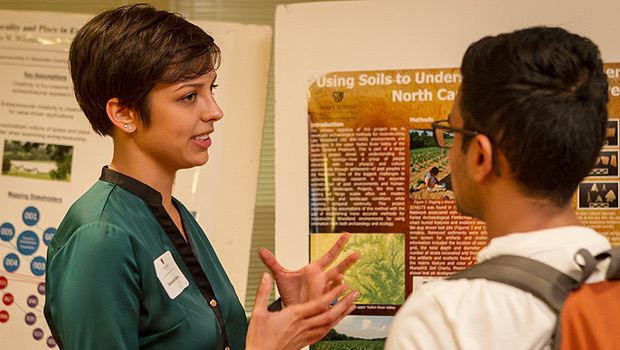
URECA: supporting undergraduate research
October 5, 2012 | 2012 Highlights: Humanities, 2012 Highlights: Mentoring, 2012 Highlights: Science and Research, Faculty, For Alumni, For Parents, Mentoring, Research, Student, Top Stories, Wake Forest College
Undergraduate research has been a cornerstone of Wake Forest’s commitment to academic excellence. Now the Undergraduate Research and Creative Activities (URECA) Center provides student grants and administrative support for mentored, undergraduate research and encourages high-quality programs of great impact.
News
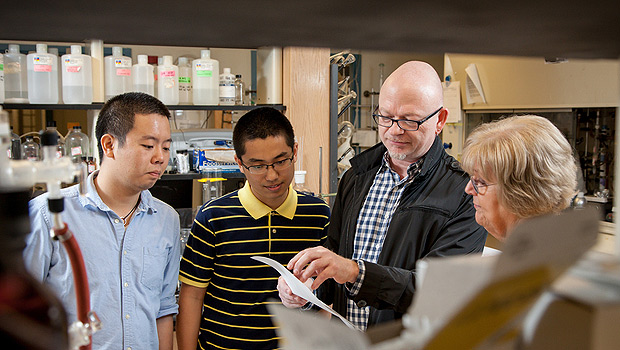
Staff assistant inspires researchers
October 2, 2012 | 2012 Highlights: Science and Research, Faculty, For Alumni, For Parents, Research, Staff, Top Stories, Wake Forest College
When staff assistant Linda Tuttle was diagnosed with breast cancer, she never imagined her experience would inspire her colleagues to design new treatments. But medicinal chemist Uli Bierbach and graduate students Song Ding and Xin Qiao were inspired to develop a targeted therapy that delivers a sneak attack to the disease – in the spirit of Pro Humanitate.

News
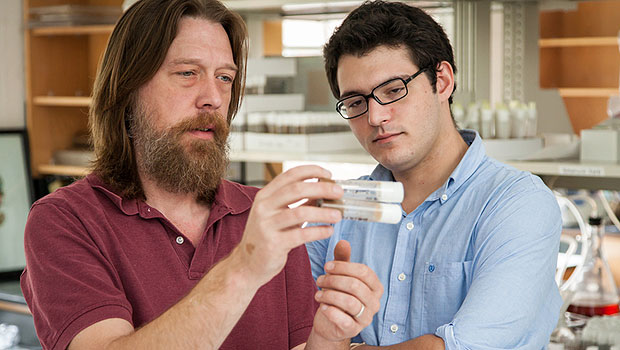
Fueling a passion to teach
September 27, 2012 | 2012 Highlights: Science and Research, Faculty, For Alumni, For Parents, Research, Teacher-Scholar, Top Stories, Wake Forest College
Timo Thonhauser has taken on one of the toughest problems of making hydrogen cars a reality: hydrogen storage. His research is supported by the most prestigious award the National Science Foundation has to offer for young scientists, given to a select few junior faculty nationwide who excel as teacher-scholars.
News
Fruit fly research might change diabetes treatment
August 8, 2012 | 2012 Highlights: Science and Research, Faculty, For Alumni, For Parents, Research, Student, Top Stories, Wake Forest College
Erik Johnson’s latest study, which appears in the current issue of the Genetics, uses the fruit fly to look at enzyme signaling as a key to developing new treatments for diabetes and as an aid in all sorts of metabolic research, including weight-loss drugs.

News
Strength training to reduce knee pain
July 16, 2012 | 2012 Highlights: Science and Research, Community, For Alumni, For Parents, Research, Top Stories, Wake Forest College
Building on the results of short-term studies showing the benefits of strength training on knee osteoarthritis (OA), professor of health and exercise science Stephen Messier will lead a five-year study to learn what level of strength training will help older adults the most.
News Archives
Wake Forest in the News
Wake Forest regularly appears in media outlets around the world.