GDP forecasts, penny shortages, and Super Bowl prediction market betting
WFU economics experts are available to comment
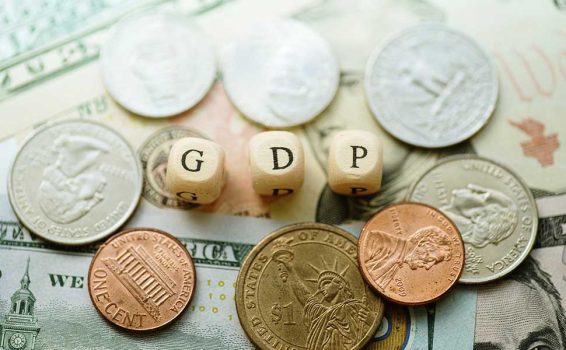
As 2026 begins, Wake Forest economics professors are available to decode the partisan bias in GDP data, discuss the rounding reality of a pennyless economy, and explain how prediction markets are transforming Super Bowl betting.
2026 GDP forecasts may be politically skewed
Economic forecasts are dominating the headlines. New research from Wake Forest University suggests these “objective” numbers might be less neutral than they appear.
Aeimit Lakdawala found that even professional, private-sector economists are susceptible to partisan bias—but in very specific ways.
His study reveals:
- Republican-leaning forecasters predict GDP growth 10-15% higher than their peers, specifically when a Republican is in the White House.
- The bias vanishes under Democratic presidencies and doesn’t affect projections for inflation or unemployment.
- The bias stems from a fundamental disagreement on tax policy and the inherent “noise” in GDP data, which allows ideological optimism to creep in.
Lakdawala is available to discuss how this bias impacts financial markets and why businesses should be wary of “optimistic” data in an election year. As 2026 budgets are set and political rhetoric heats up, his work serves as a reminder: the economic numbers are often shaped by the same divides that define our dinner table debates.
What’s causing the penny shortage problem?
Have you tried paying in cash lately and noticed your change was rounded down? Or seen a “Please use exact change” sign at a local coffee shop?
The penny shortage is hitting hard as we start 2026. While President Trump’s directive to end penny production was a cost-saving win for the U.S. Treasury, it has created a logistical nightmare for cash-heavy small businesses.
Robert Whaples, the nation’s leading expert on the “death of the penny,” can explain:
- How billions of pennies “stuck” in American couch cushions and jars of coins are causing the penny problem.
- Why stores have to pay far more than 50 cents to get a roll of 50 pennies.
- Why the friction with pennies is a necessary (and temporary) growing pain for a more efficient economy.
Is the nickel next? “When people are no longer willing to stoop over and pick up a nickel from the sidewalk, then it will be time to stop minting them, too,” Whaples says.
Whaples has been featured on CBSNews, NYT, WSJ, and NPR as the go-to authority on the elimination of the penny. He is available to talk about why spare change is disappearing and what to do with those jars of coins.
Why the Super Bowl is the ultimate stress test for prediction markets
As millions of Americans place their Super Bowl bets this week, a new kind of “wagering” is disrupting the traditional sportsbook model. Koleman Strumpf, a leading political economist, argues that prediction markets are doing more than just facilitating gambling—they are providing the world’s most accurate “live” forecasts.
Strumpf can discuss:
- Markets vs. Bookies: Why peer-to-peer prediction markets often find the “real” odds faster than a Vegas oddsmaker can.
- The Wisdom of the VIP: Why these markets attract “sharps” and sophisticated traders who treat the Super Bowl like a stock IPO.
- Cannibalization or Growth? New 2026 data shows prediction markets now hold about 5-10% of the sports betting handle—is this the beginning of the end for traditional sportsbooks?
Strumpf has been featured in NYT, Marketplace, LA Times, and Business Insider.
______
FOR JOURNALISTS: Wake Forest News and Media Relations is the University’s first point of contact for reporters. To schedule an interview with any of these faculty experts for in-person, television, radio, or virtual segments, please contact: Kim McGrath, 336.758.3209, .
Recent News

On Earth Day: Here’s how economics can save the Rhinos
On Earth Day: Here’s how economics can save the Rhinos
Acclaimed author and scientist Alan Townsend to head Wake Forest Sabin Family Center for Environment and Sustainability
Acclaimed author and scientist Alan Townsend to head Wake Forest Sabin Family Center for Environment and Sustainability