Top of page

Community Gathers for Climb to Remember

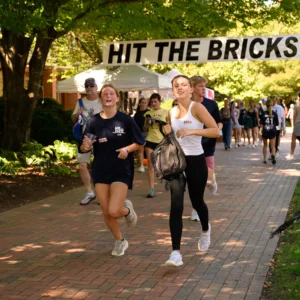
The No Fear Battalion, an Army ROTC unit consisting of 70 cadets from Wake Forest University, Winston-Salem State University and Salem College, led a somber yet uplifting tribute on Friday morning. In memory of the victims of the Sept. 11, 2001 tragedy, cadets and members of the Winston-Salem community ran the steps of Allegacy Stadium…

Categories: University Happenings


WFU: A Climb to Remember

Join the No Fear Army ROTC Battalion, based at Wake Forest University, for the annual Climb to Remember, which honors the 2,977 victims of the Sept. 11 terrorist attacks. On Friday, Sept. 11, participants aim to climb one stair at Allegacy Stadium for each of the victims. Students from Wake Forest, Winston-Salem State University and…

Categories: Happening at Wake


How do human pathogens adapt? New Wake Forest research holds some clues

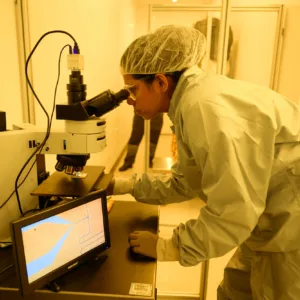
Research underway in the lab of Rebecca Alexander, professor in Wake Forest University’s Department of Chemistry, is shedding light on a peculiar human bacteria, Mycoplasma penetrans. Alexander’s work to understand how and why this unique pathogen acts as it does could one day lead to new classes of drugs that better target illnesses associated with…

Categories: Research & Discovery


Mapping the Forest

It took one drone, 300 million laser data points and seven teams of students on foot to map Wake Forest University’s trees.   Led by Ovidiu Csillik, an assistant professor of remote sensing in the environment and sustainability studies program, the project produced a publicly accessible, interactive 3D digital map of more than 1,000 trees and…


Depression and stress feed long-term fatigue in breast cancer patients

For breast cancer survivors, new research shows that feelings of depression and perceptions of psychological stress make the biggest difference in whether they experience fatigue up to two years after chemotherapy started. Researchers had thought that damage to the heart caused by chemotherapy would be the main contributor to survivor fatigue. But that turned out…

Categories: Research & Discovery


AI agents are all the rage—but research shows they leak private data

Before you prompt AI to answer another question or perform another task, a Wake Forest computer scientist wants you to know it could expose your sensitive data. Ying Zhang, an assistant professor in Wake Forest University’s Department of Computer Science, studies security in software engineering. Her latest research, “How Your Credentials Are Leaked by LLM…

Categories: Research & Discovery


Developers beware: When apps add AI, it risks hacking

In the race to add AI capabilities to their mobile apps, developers have opened up a new security weakness that puts their own wallets at risk. A new study led by Wake Forest undergraduate student Eric Gao analyzed 444 iOS applications. It found that 282 exposed credentials needed to access the developers’ large language model…


Wake Forest News

336.758.5237

Meet the News Team »

Archives