
These salamanders may hold the key to human tissue and limb regeneration
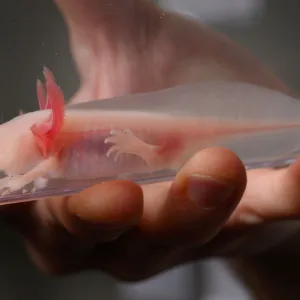 Biologist Josh Currie explains what he has learned about limb regeneration in axolotls so far and how it might apply to humans in the future.
Categories: Experts, Research & Discovery
 The OpenAI breach of Hugging Face’s digital library amplifies a growing concern among cybersecurity researchers: The fast-moving software development process isn’t thinking about security early—or broadly—enough. “A vulnerability in code, configuration or infrastructure may already pose a risk, but AI agents can amplify its impact by autonomously exploring systems and attempting attacks at a scale…
 As movie-goers watch Matt Damon fight his way home in Christopher Nolan’s "The Odyssey," the biggest question isn't how Nolan pulled off the massive cinematic scale, secured the $250 million budget, or created the mythical monsters—it’s why a 2,700-year-old poem still commands this kind of attention. According to Wake Forest University Classics professor Michael Sloan,…
 In a world where deepfakes, misinformation and AI-driven cheating are commonplace, it is getting harder to be honest. Christian B. Miller, A.C. Reid Professor of Philosophy at Wake Forest University, explains why honesty is losing ground and why it matters. “Failures of honesty are encouraged and incentivized in new and powerful ways,” writes Miller in…
 The new Medicare GLP-1 Bridge program offers broader, more affordable access to weight loss drugs to address the growing obesity crisis. But there’s a catch when it comes to bone health. The rapid, substantial weight loss from GLP-1 use can amplify the loss of bone and muscle that occurs when older adults lose weight, said…
 Following overwhelming, bipartisan passage in both the House and Senate, the 21st Century ROAD (Renewing Opportunity in the American Dream) to Housing Act officially became law on July 11, 2026, marking the most significant piece of federal housing legislation in decades. While national media coverage has largely focused on macroeconomic numbers and housing supply incentives,…
 With 48 international soccer teams visiting U.S. cities for pre-World Cup training – including the German Men’s National Team in Winston-Salem – a Wake Forest University Health and Exercise Science professor sees an exciting opportunity for pro players to influence the health and wellbeing of local youth for years to come. Abbie Wrights, an associate…
 As 48 national soccer teams converge on North American cities this summer to train for the FIFA World Cup 2026™, the stakes might go well beyond who wins or loses. These teams will spur what psychologists call the “demonstration effect.” When young people witness elite athletes perform, especially in high-profile events close to home, they…
 Society often views happiness as a destination to be reached through self-help books and the advice of Instagram influencers. Christian Waugh, professor of psychology at Wake Forest University, says the pursuit of resilience—rather than happiness—provides a more sustainable framework for navigating life’s stressors. Waugh studies emotions, stress and coping and has published research on how…
 As the Class of 2026 prepares for commencement, the narrative around the entry-level job market is shifting. While many headlines suggest AI is a threat to new grads, Andy Chan, Vice President for Innovation and Career Development at Wake Forest University, argues the opposite: AI is actually resurrecting the value of a liberal arts education.…