On Earth Day: Here’s how economics can save the Rhinos
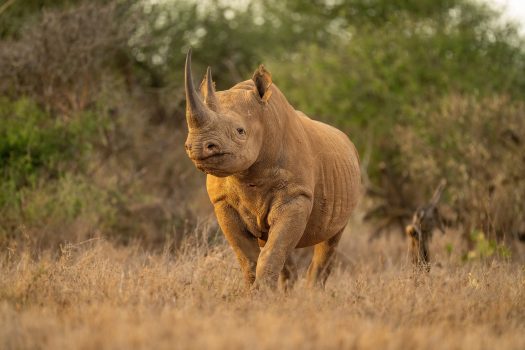
HIGHLIGHTS
- The Global Paradox: While South Africa saw a 16% national decline in rhino poaching in 2025, poaching in Kruger National Park nearly doubled.
- A Shift in Strategy: Economic principles can be used to undermine the financial incentives that drive poaching syndicates
- Earth Day Event: The research and findings from Chen’s new book, “The Economics of the Wildlife Trade”, will be the focus of an international book launch and discussion at Oxford University on April 22.
As the world marks Earth Day, a troubling paradox has emerged in the fight to save one of the planet’s most iconic species.
Data from the December 2025 CITES CoP20 global forum—a gathering where governments worldwide set the rules for international wildlife trade—highlights a startling trend. While South Africa’s anti-poaching and anti-trafficking efforts yielded a 16% overall decline in rhino poaching in 2025 compared to 2024, the success was not uniform.
While poaching in some regions plummeted due to intense security, poaching in Kruger National Park reported a total of 175 poached rhinos for 2025, double the number of animals killed in the park in 2024.
This displacement, which economists call the “waterbed effect,” is exactly what Wake Forest economist Fred Chen predicted: pushing down on poaching in one park doesn’t eliminate the crime—it simply forces it toward softer targets.
Moving beyond the “security treadmill”
As 20th-century security tactics fail to stop a $20 billion global market, Chen argues we must pivot from fences to market disruption.
“Mainstream conservationists tend to use traditional methods to deter poachers, such as increasing enforcement and monitoring. These move the problem elsewhere,” Chen says. “Poachers are innovative, cunning and desperate.”
A new blueprint for conservation
Chen’s research explores how economic principles can be used to undermine the financial incentives that drive poaching syndicates. His proposals include:
- Destabilizing illicit markets: Using market forces to lower the value of rhino horn.
- Synthetic substitutes: Investigating how high-quality alternatives might flood the market and reduce the demand for wild-harvested horn.
- Economic re-investment: Shifting global conservation funding from reactive policing to proactive market strategies.
“A deep understanding of economic principles is needed to protect rhinos,” Chen says. “We have to be as innovative as the people we are trying to stop.”
Global discussion on Earth Day
In his new book, “The Economics of the Wildlife Trade” (2026), co-authored with interdisciplinary scientist Michael ‘t Sas-Rolfes, Chen proposes a pivot from “fencing off nature” to market disruption.
A discussion of the findings in the book, The Economics of the Wildlife Trade (2026), co-written with Michael ‘t Sas-Rolfes, will be held at Oxford University on Earth Day, April 22. The event will be online as well as in person. More information is on the website here.
Categories: Environment & Sustainability, Experts, Research & Discovery
Media Contact
Kim McGrath
336.758.5237
Recent News

Acclaimed author and scientist Alan Townsend to head Wake Forest Sabin Family Center for Environment and Sustainability
Acclaimed author and scientist Alan Townsend to head Wake Forest Sabin Family Center for Environment and Sustainability
Professor wins award to study color-changing plastic and shape-shifting springs
Professor wins award to study color-changing plastic and shape-shifting springs