From capstone to community: Wake Forest seniors build solar trailer to support local fire department
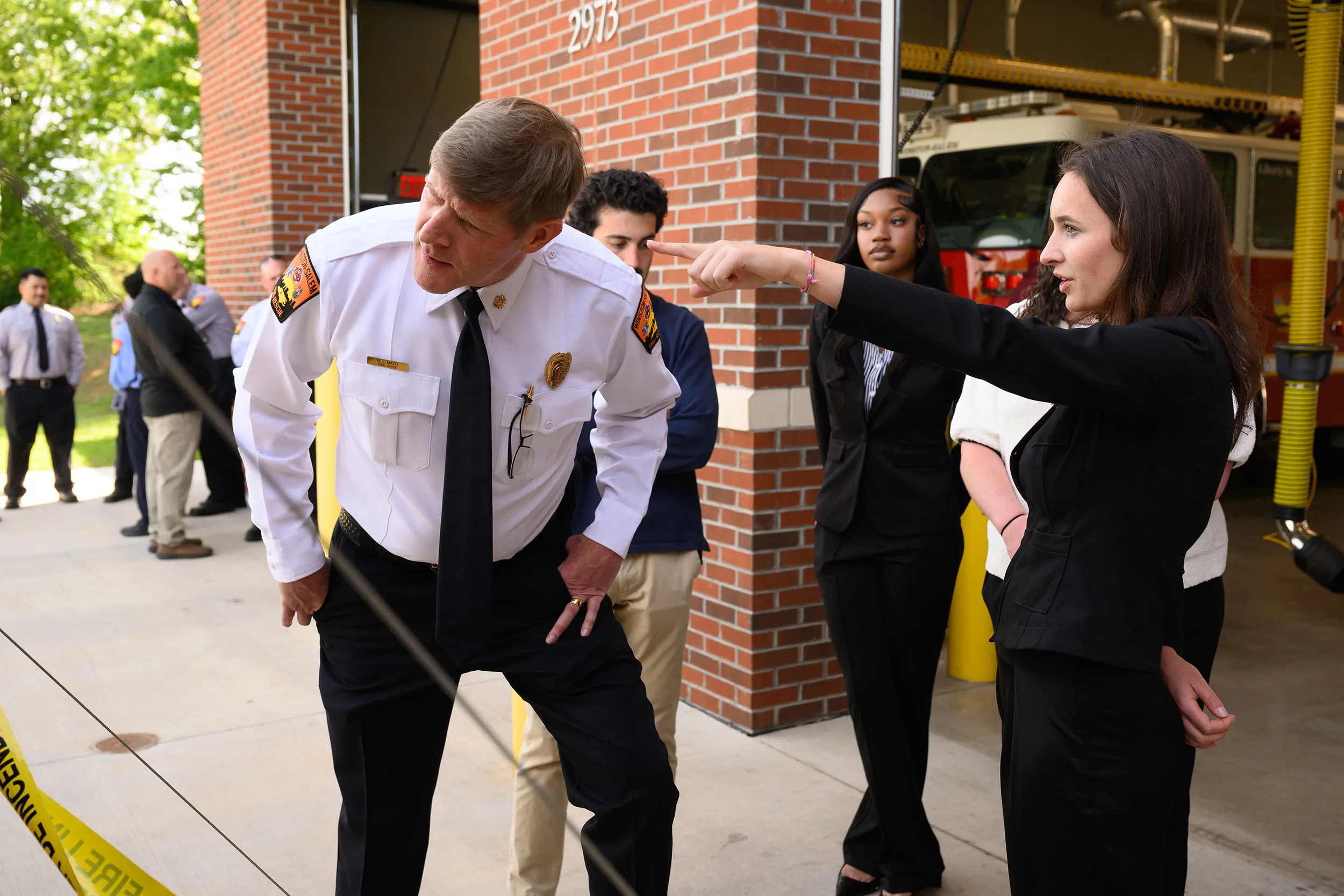
In a fitting presentation for Earth Day, Wake Forest senior Scarlett Johnson showed Winston-Salem Mayor Allen Joines and Fire Chief Trey Mayo the mobile solar-powered trailer a team of engineering students designed and built.
Johnson pointed out the 48-volt solar panels, the inverter box, the lithium iron phosphate batteries and the stabilizing jacks added to help prevent the trailer from tipping over in high winds. It can generate 14.4 kilowatts per hour.
Media coverage:
WXLV ABC 45
Winston-Salem unveils solar installation at Fire Station 3 as part of clean energy push
During power outages, the trailer is designed to be deployed to points around Winston-Salem to help residents recharge electricity-dependent medical devices, such as oxygen machines.
“It will be much more efficient than sending out a fire truck,” said Shaleen Miller, Office of Sustainability director for Winston-Salem, who collaborated with the Wake Forest engineering students and faculty.
The project is part of a larger city effort to meet clean energy and sustainability goals. By the end of the summer, four fire stations will be powered by solar energy.
“I think it is wonderful that we’re collaborating with Wake Forest and other institutions throughout our city to help reach our goals,” Joines said at the April 22 gathering of local officials and media at Fire Station #3.
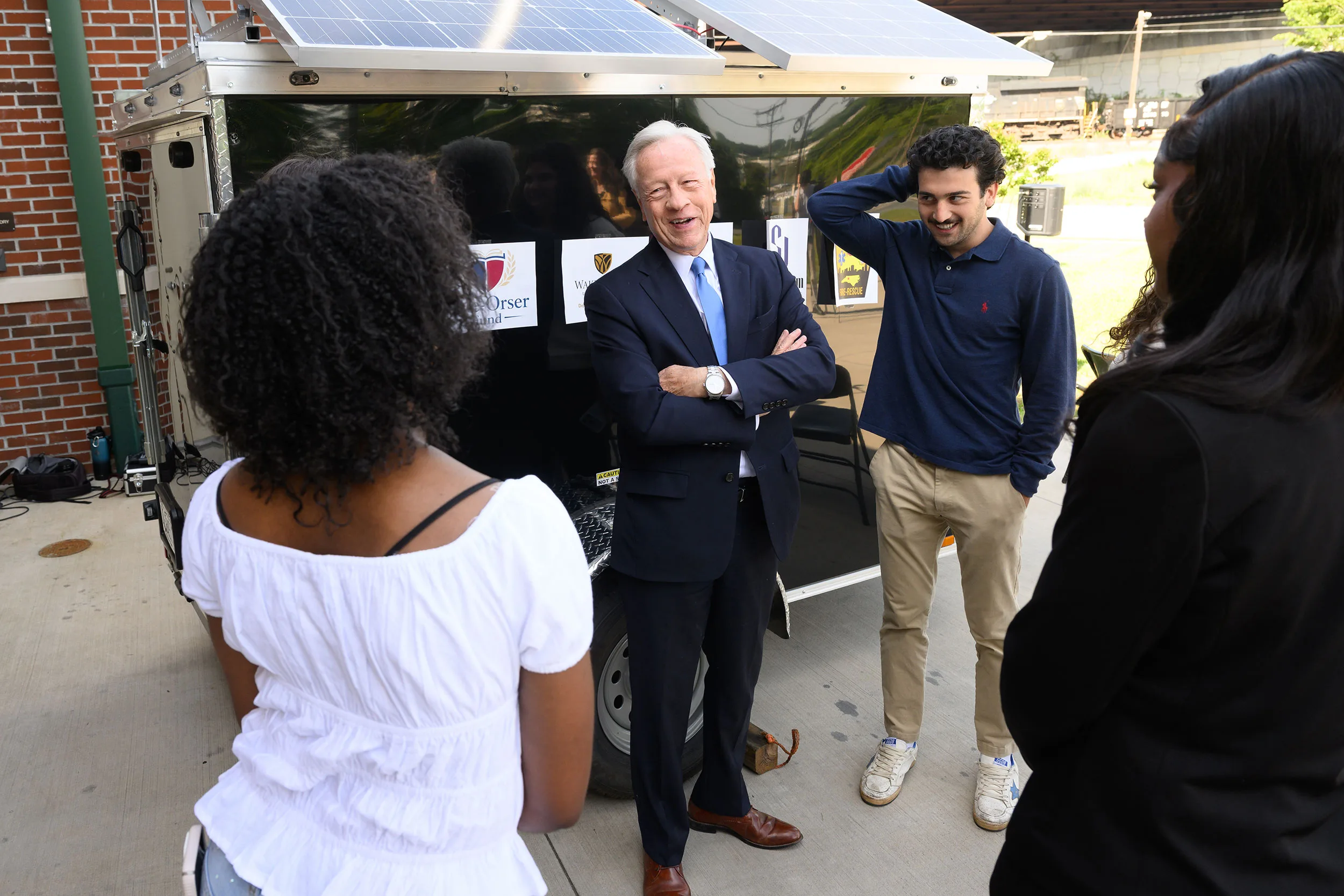
“This project has taught me so much about working as a team, meeting deadlines, sharing ideas and curating professional-level deliverables,” Johnson said. “It means a great deal to me that our project will be integrated into the Winston-Salem community. I hope it symbolizes to the community and future students at Wake Forest that we all have the capacity to work together to solve real problems.”
The senior capstone project was completed over two academic semesters and involved collaboration among Wake Forest University, local industry partners and the city’s fire and sustainability departments.
The students start in the fall with an idea and then present the design, said Courtney Di Vittorio, the professor of engineering who teaches the capstone course. They develop an initial prototype, then test and refine.
“The capstone is meant to be the bridge between the education and practice,” added Hussein Abdeltawab, assistant professor of engineering who helped mentor the students working on the project. “They are getting skills in electrical and mechanical engineering, meeting stakeholders and understanding the needs of the fire department.”
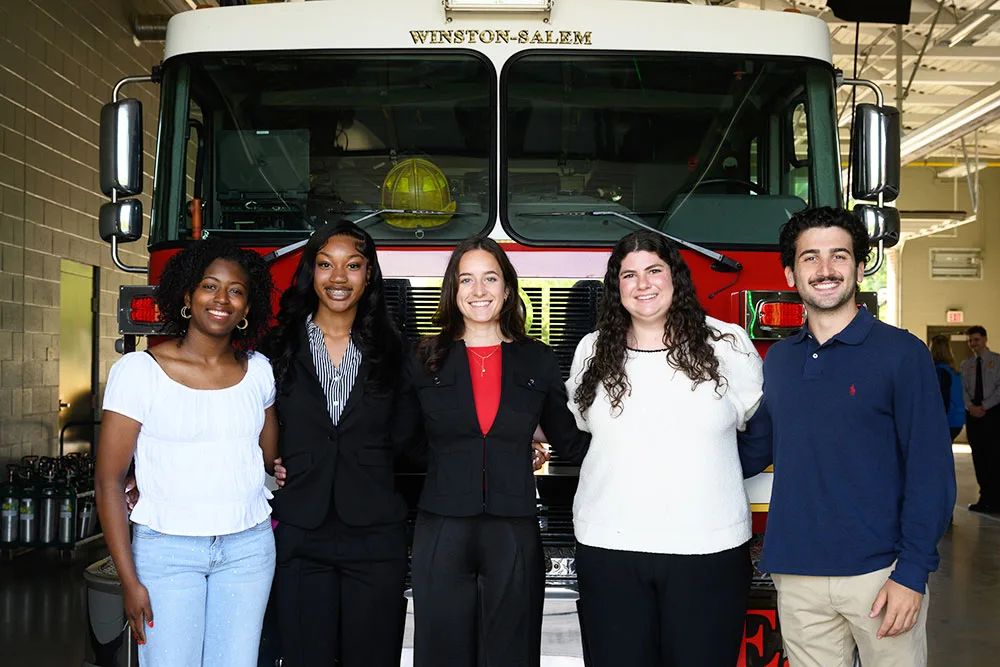
Members of the project team also included Ryan Olivia Swilling, Devin Topman, Keenan Chiarier, Nytalia Beckford and Anna Cristina Fatemi. They had support from Wake Forest’s Hale-Orser Fund for faculty-student engagement, technical mentorship and solar panel donations from SEL SOLAR, and faculty mentorship from Di Vittorio, Abdeltawab and Tricia Clayton. Nick Golden, who manages the engineering studio, helped with construction.
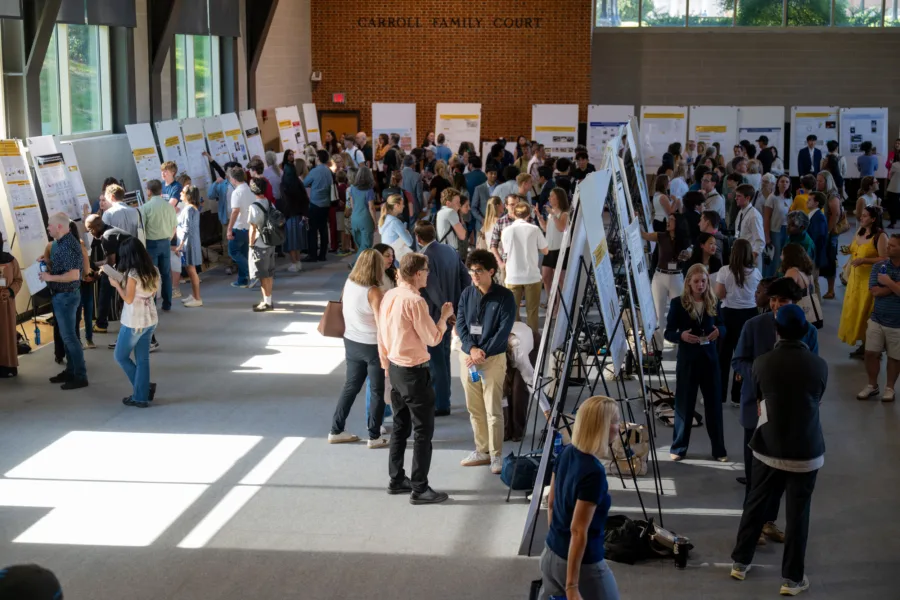
Senior engineering students, including those working on the solar trailer, presented their final capstone design projects during the symposium on April 24 and the design showcase on April 29 at Wake Downtown. See photos of the event and learn more about the 2026 projects.
Recent News
Celebrating 20 years of undergraduate research and discovery
Celebrating 20 years of undergraduate research and discovery
What the neuroscience of motivation has to say about GLP-1 drugs
What the neuroscience of motivation has to say about GLP-1 drugs