Defining the future of public service
Wake Forest University hosts national leaders in D.C.
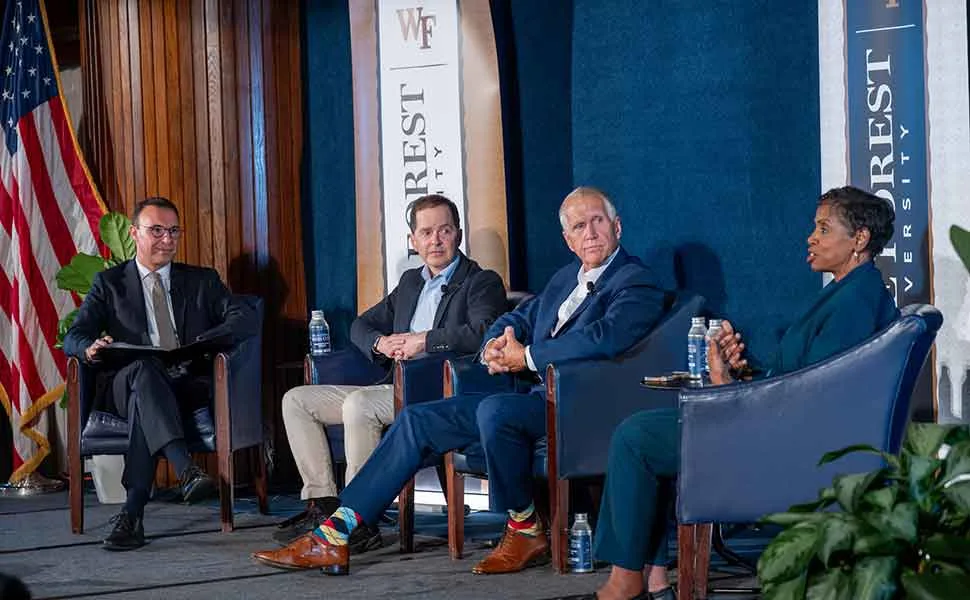
What does it mean to serve the public good today? Rooted in its motto, Pro Humanitate (For Humanity), Wake Forest University’s Wake Washington Center brought lawmakers, policy experts and students together for a discussion at the National Press Club to examine the nature of public service and the character required to lead.
The panel included President, US Association of Former Members of Congress Donna Edwards (BA ’80), North Carolina Senator Thom Tillis, and President and CEO of the Partnership for Public Service Max Stier.
Moderated by Michael Lamb, professor and senior executive director of Wake Forest’s Program for Leadership and Character, the discussion focused on how character serves as the foundation for effective public stewardship across all sectors.
The full panel discussion is available on C-SPAN.
Top 5 takeaways:
- Culture starts at the micro-level
Ethical standards aren’t set by policy—they’re modeled daily. When young staffers observe leaders operating with a clear moral center, they mirror those standards across the organization.
“When I had a boss who behaved in a certain way, it meant that I behaved in that way, too. If I had a boss who behaved with ethical standards, I rose to that standard.” — Former U.S. Representative from Maryland Donna Edwards
- Rethink top-level accountability
Managing and modernizing public institutions requires holding top appointees to the same standards of competence and character expected of career staff.
“We should have the same standard of competence and character for the political appointees as we do for civil servants.” — President and CEO of the Partnership for Public Service Max Stier
- Civic education is essential
Higher education must act as an active incubator for future leaders. Universities play a critical role in teaching rising professionals to navigate complex challenges with courage and civility.
“We’ve really been working on bringing students here to Washington, D.C., to learn about public service, to demonstrate the skills that it takes to lead effectively, and to grow as individuals.” — Wake Forest President Peter Rodriguez
- Character is strategic infrastructure
Virtues like integrity, humility and stewardship aren’t soft skills—they are operational necessities. Leaders anchored by strong core values make more sustainable, trust-building decisions under high-stakes pressure.
“Some of the most extraordinary people I have met in the world work in career foreign service… Part of the solution is to emulate positive behavior and become role models for the next generation.” — North Carolina Senator Thom Tillis
- Civil discourse requires active practice
Creating environments where people can disagree respectfully without shutting down conversation is a vital leadership skill. Modeling constructive dialogue in real-time turns friction into meaningful progress.
“We hope this conversation will be one of the many, many conversations we have where we talk about challenging issues. We may agree or disagree, but we do so civilly.” — Wake Forest President Peter Rodriguez
Modeling civil discourse
For the Wake Forest students interning across D.C. agencies and congressional offices, the evening served as an extension of their classroom education—and a challenge for their future careers.
“Those of us at Wake Forest think about what it means to be for humanity here in Washington and far beyond Washington,” said Lamb, asking the audience to consider “what it might mean for us to live out that future.”
For nearly a decade, the Wake Washington Center has served as a bridge between campus learning in Winston-Salem, North Carolina, and national policy in D.C. The recent event highlighted the University’s role as a convener of constructive dialogue on topics of national importance.
Natalie Jennings, senior managing editor of Wake Forest Magazine, attended the event in Washington, D.C. on September 22. Read Jennings’s feature story, “The difficult present and bright potential future of public service,” on Wake Forest Magazine’s website.
Recent News
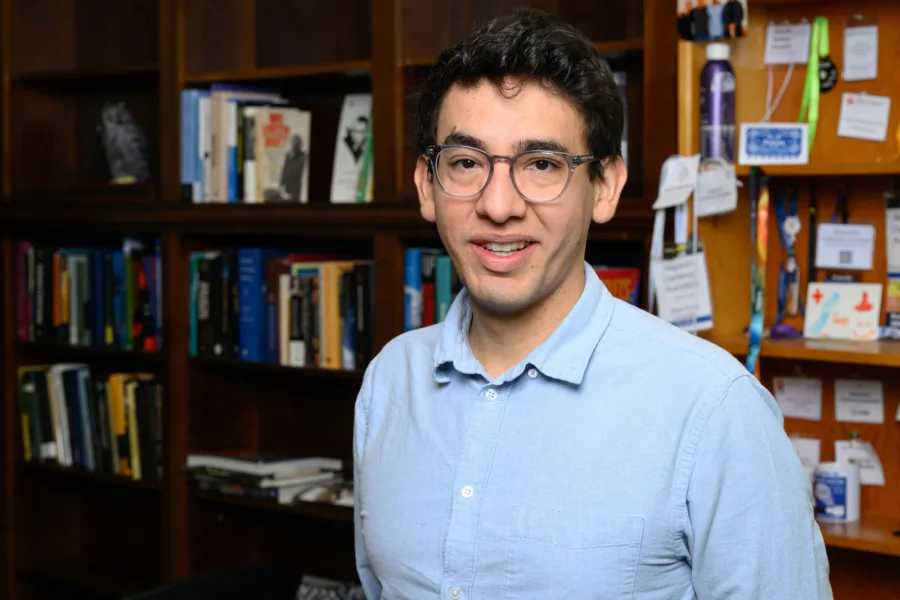
NASA grant offers Wake Forest students an opportunity to help develop new tools to understand gravity
NASA grant offers Wake Forest students an opportunity to help develop new tools to understand gravity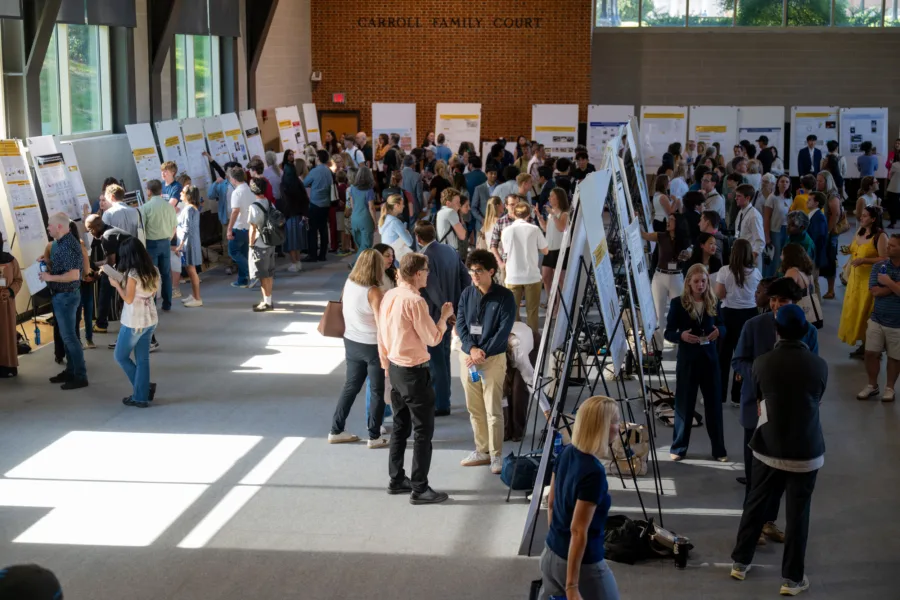
Celebrating 20 years of undergraduate research and discovery
Celebrating 20 years of undergraduate research and discovery