NASA grant offers Wake Forest students an opportunity to help develop new tools to understand gravity
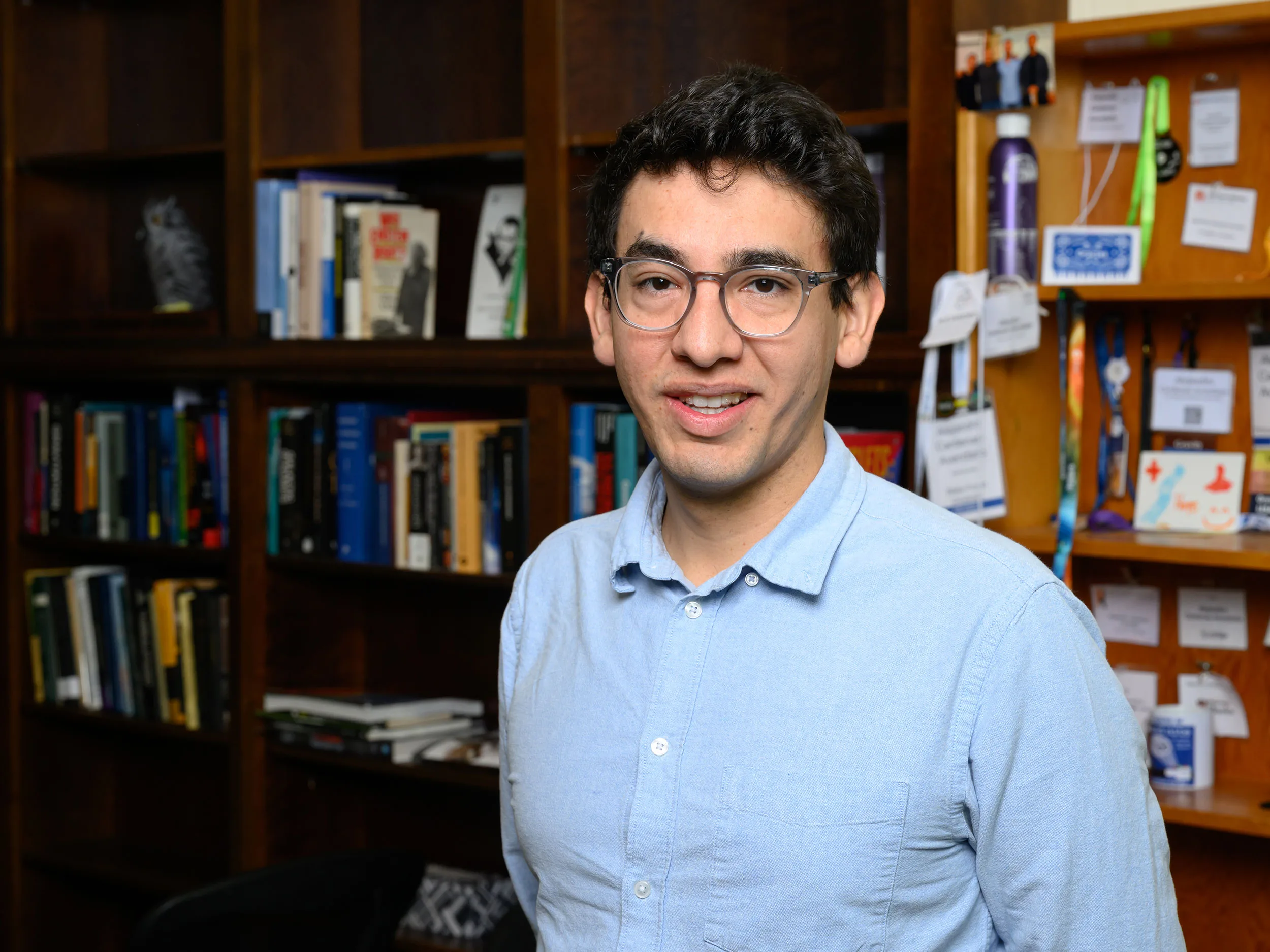
NASA has awarded Wake Forest University Assistant Professor of Physics Alejandro Cárdenas-Avendaño a two-year, $374,000 grant to advance data analysis capabilities for the anticipated launch of NASA’s Laser Interferometer Space Antenna (LISA) in 2035—the world’s first space-based gravitational wave observatory.
Detecting and analyzing gravitational waves offers a new window into observing and understanding our universe.
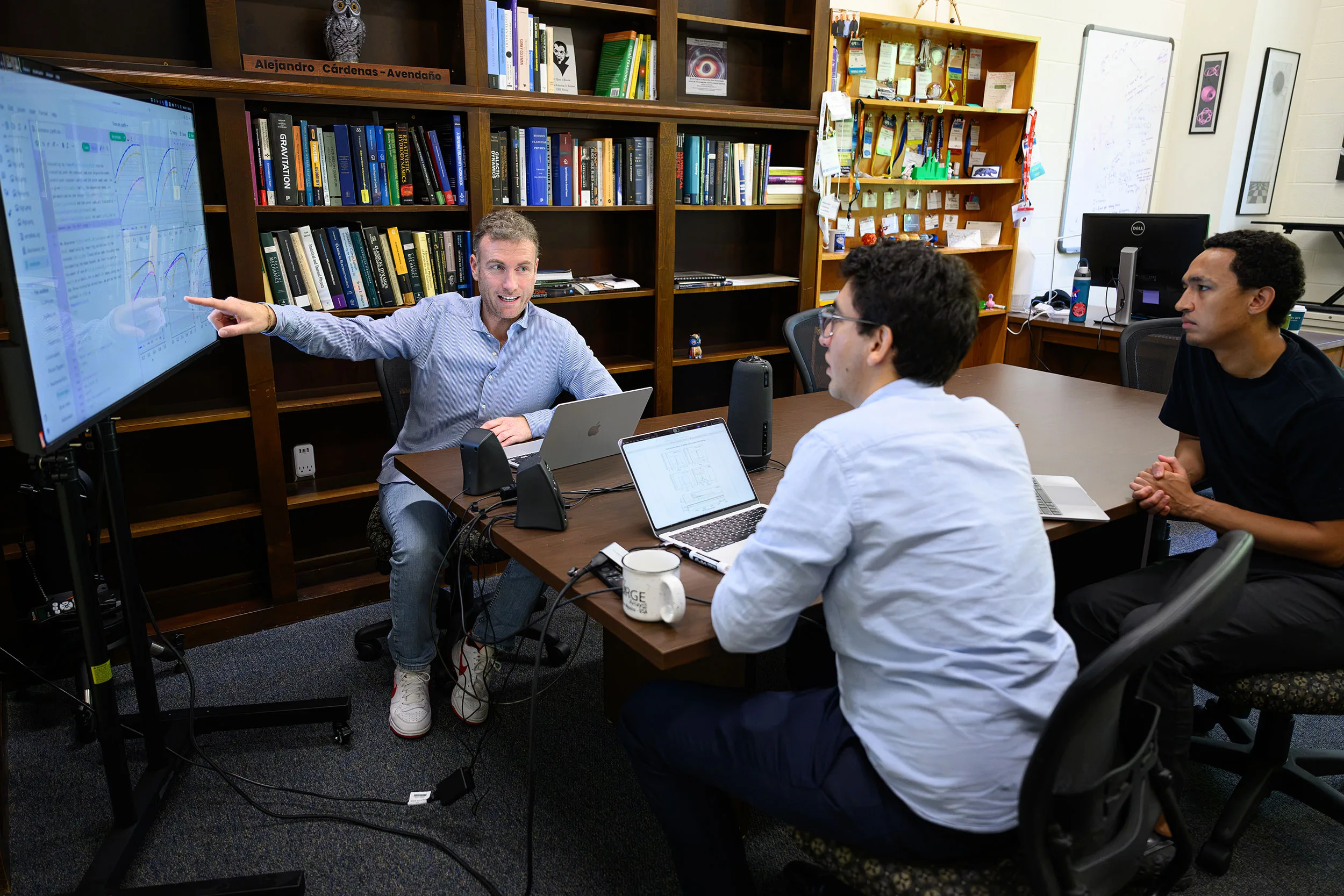
The grant will allow Wake Forest students to “serve as the primary drivers of the research, receiving hands-on mentorship,” said Cárdenas-Avendaño, adding that the funding will help support two full-time graduate students, Lennox Keeble and Edoardo Levati, and at least two summer undergraduate researchers. Cárdenas-Avendaño and his students will also have the opportunity to collaborate with NASA research astrophysicist Tyson Littenberg at the Marshall Space Flight Center in Huntsville, Alabama.
This grant is funded through Collaborative Opportunities for Mentorship, Partnership and Success in Science (COMPASS), which fosters collaboration between NASA and an academic institution to advance NASA scientific priorities and to train the future STEM workforce.
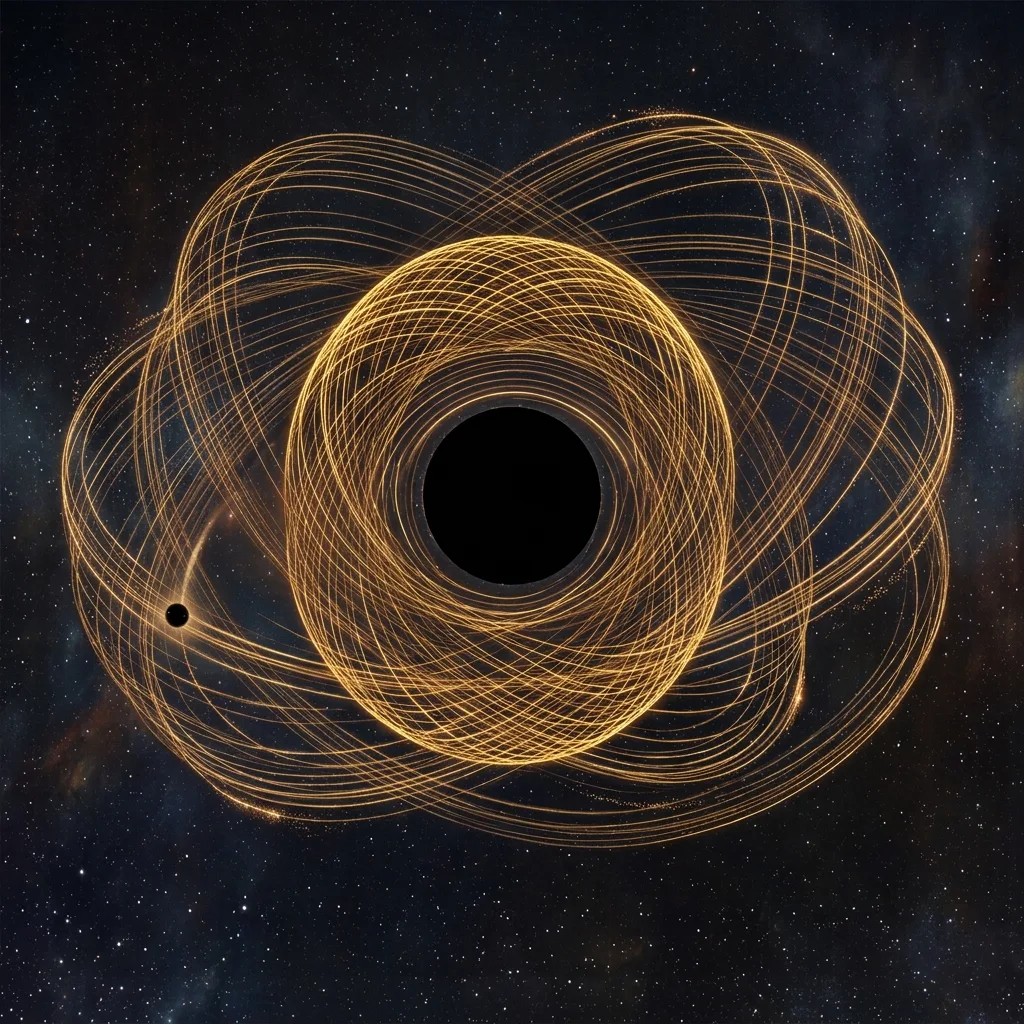
Cárdenas-Avendaño’s research will use machine learning and simulations to detect and characterize the gravitational waves created by the orbit of a small, compact object around a supermassive black hole, which is known as an extreme mass-ratio inspiral. These systems are usually found at the center of galaxies.
“With this grant, our task is to develop novel techniques, something that is called simulation-based inference…to detect these systems and characterize them,” Cárdenas-Avendaño said. The grant allows “Wake Forest and our students, my group, to collaborate with scientists at NASA towards the LISA mission, which is the future of millihertz gravitational waves.”
Gravitational waves as a messenger from the universe
Before Einstein’s theory of relativity, light was the only messenger thought to reveal information about the universe. Our eyes can sense at least some of the spectrum of light, allowing humans to contemplate and theorize about the mysteries of the universe.
“You take a telescope, as Galileo did, and then you see the moons of Jupiter. We call that [light] a messenger,” Cárdenas-Avendaño explained, noting that special tools are needed to see a fuller spectrum. “Light comes in many flavors, from gamma rays to radio waves, very long wavelengths. That—light—was our portal to the universe.”
But since Einstein’s theory, scientists have been investigating and theorizing about other portals to understanding our universe. For instance, how gravity works in space.
“It was theorized that the interaction of any object that has mass will generate gravitational waves,” Cárdenas-Avendaño said, explaining that Einstein believed that space and time form a kind of fabric that bends around heavy objects. This is called spacetime. As massive objects in space rotate, merge or collide, they create waves or ripples in this fabric. These are gravitational waves.
But unlike light, gravitational waves are “really beyond our sensory comprehension,” Cárdenas-Avendaño said. “This means that you need to build instruments that are capable of being very sensitive to changes in spacetime—when a gravitational wave passes.”
The first direct measurement of gravitational waves passing by Earth came in 2015, thanks to the Laser Interferometer Gravitational-Wave Observatory (LIGO) and Virgo Collaborations.
NASA, in partnership with the European Space Agency, is developing such an observatory to launch into space—the LISA project—to complement the data provided by Earth-based observatories. From space, we can detect other portions of the gravitational wave spectrum, filling a critical “mid-band” blind spot.
Cárdenas-Avendaño and his students will use new techniques to detect and analyze some of these gravitational wave systems—the extreme mass-ratio inspiral and the ripples in spacetime they create.
Transferable knowledge and skills
While the generous grant is a unique opportunity for students to work on a pioneering NASA project in collaboration with NASA scientists, the skills students acquire through this work are transferable to numerous fields of study.
“I can’t emphasize enough that all these skills are transferable because my students will learn how to tackle difficult problems,” said Cárdenas-Avendaño, noting that the data analysis skills could be useful in economic or health sciences fields. “In humanity, whenever there is a new instrument that offers the opportunity to study the universe, we always learn something that we didn’t know.”
— Contributed by Elaine Ellis
Recent News
Celebrating 20 years of undergraduate research and discovery
Celebrating 20 years of undergraduate research and discovery
What the neuroscience of motivation has to say about GLP-1 drugs
What the neuroscience of motivation has to say about GLP-1 drugs