Temperature measurement error may cause climate-impact studies to understate impacts by 15% or more
HIGHLIGHTS
- New study shows temperature proxies can contain substantial measurement error.
- Measurement error varies systematically across locations and geography.
- The study provides practical guidance for researchers.
When policymakers and city officials plan for climate change, they rely on economic studies showing how extreme heat impacts violent crime, public health, energy grids, and crop yields.

However, a new study published in the Journal of the Association of Environmental and Resource Economists reveals a hidden problem in that research: the temperature proxies used in many climate-impact studies can contain substantial measurement error, leading researchers to misestimate the true impacts of temperature and, on average, potentially understate climate impacts by at least 15%.
The study, co-authored by Wake Forest Assistant Professor of Economics Alex Yu and Distinguished Professor of Economics Richard Carson (UC San Diego), demonstrates that standard methods researchers use to construct temperature measures can introduce substantial measurement error that varies systematically across locations and geography.
Why temperature measurement can be inaccurate
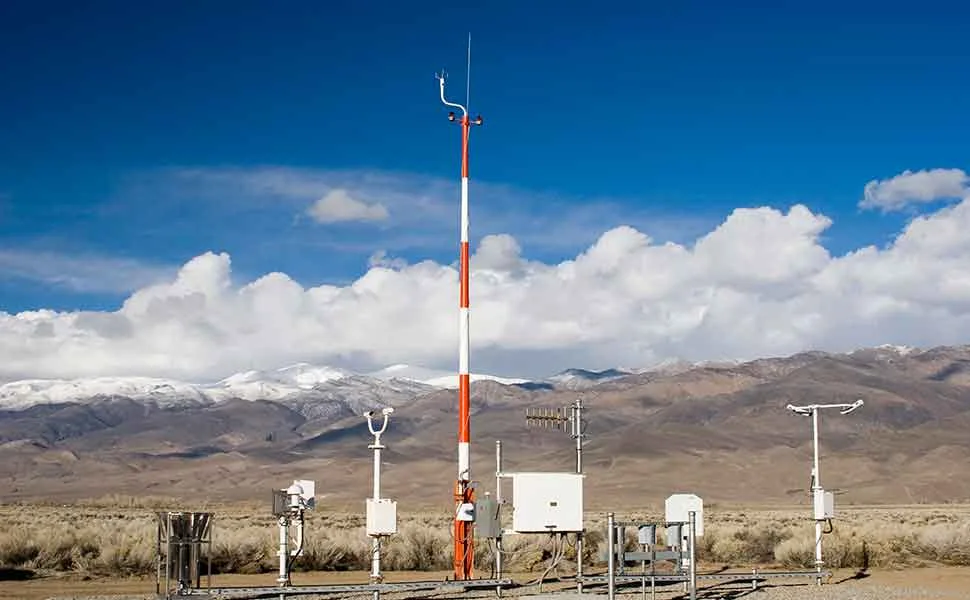
Because physical weather stations are miles apart, researchers use statistical estimates of temperatures in specific cities, neighborhoods or farm fields. The study reveals that these best guesses or “proxies” carry substantial measurement errors that traditional statistical assumptions fail to capture:
- Microclimate blindspots: In mountainous regions like Boulder, Colorado, standard weather proxies differed from actual temperatures by an average of nearly 15°F. In flatter, more densely monitored areas like Chicago, errors were as low as 1°F.
- Distorting the temperature signal: Measurement errors can persist over time and vary systematically with local geography. When researchers apply these estimated temperatures to real-world outcomes—such as crime or heat-related illnesses—the resulting estimates can be biased upward or downward.
- Larger than climate targets: For one commonly used weather proxy—temperature measurement errors averaged 3.3°F (1.85°C)—an error magnitude larger than the global Paris Climate Agreement warming limit of 1.5°C.
What this means for public policy
Using more than 20 million crime records, the researchers first estimated the relationship between extreme heat and violent crime using city-level crime and temperature data as a benchmark. They then aggregated both crime and temperature to the county level and estimated the same relationship, finding that the estimated effect of extreme heat became smaller at this coarser geographic scale.
“If climate-impact studies misestimate how severely extreme heat drives crime rates, crop loss, or health emergencies, policymakers may also misestimate the scale of the responses needed to address those impacts,” said Yu.
Improving temperature measurement
The research doesn’t just expose the problem; it provides practical guidance for researchers. No single temperature proxy works best everywhere: in areas with dense weather-station networks, nearby station measurements can outperform more complex gridded products, while gridded data may perform better where monitoring is sparse.
More broadly, the study highlights the value of better spatial monitoring of temperature. Expanding and maintaining dense weather-station networks—and more carefully matching temperature measurements to where people, farms, businesses and ecosystems are actually exposed—can reduce measurement error at its source.
About the researchers
- Chu (Alex) Yu, Assistant Professor of Economics, Wake Forest University ()
- Richard T. Carson, Distinguished Professor of Economics, UC San Diego ()
Data and study availability:
The full study, “Mismeasured and Misunderstood: Unmasking the Temperature Proxy Problem in Climate Impact Estimates,” is published in the Journal of the Association of Environmental and Resource Economists.
Recent News