
Wake Forest senior helps create mental health screening tool to improve patient care at local health clinic
 When Amelia Suhocki, a senior biochemistry and molecular biology major from Durham, North Carolina, first came to Wake Forest, she wanted to learn more about public health and find opportunities to get involved in the Winston-Salem community. That led her to the Community Care Center, one of the largest free health clinics in the Southeast, serving…
Categories: Experiential Learning, Mentorship, Pro Humanitate, Research & Discovery
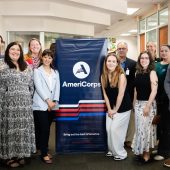 Senior leaders from AmeriCorps and the Centers for Disease Control and Prevention visited Winston-Salem this week to see first-hand the impact Wake Forest’s Public Health AmeriCorps program is having in the community. The federal agencies awarded the University more than $200,000 to continue the program for a third year. “Hearing about the personal connection that…
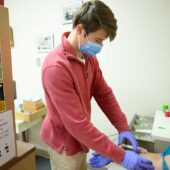 Public Health AmeriCorps grew out of the immediate response to the pandemic. It’s a historic partnership between AmeriCorps and the Centers for Disease Control and Prevention. Wake Forest University was selected to be part of the first wave of nationwide grantees. It’s one of two North Carolina-based higher education institutions in the inaugural cohort.
 A new study co-authored by @Wake Forest Statistics Professor Lucy D'Agostino McGowan takes a closer look at how transparency in public health messaging can influence community response. The research, also conducted by one of her students, was recently published in the online scientific journal PLOS ONE.
 Deciding to get a flu shot may seem simple, but communicating about it is not, new research suggests. Unfortunately, there’s no clear prescription for how health care providers and public policy officials can effectively encourage patients to hit the flu clinic. Filling the communication gap are patients’ personal beliefs and biases about the vaccine’s effectiveness and impact on their own health.