Wearing a weighted vest to strengthen bones? Make sure you’re moving
New Wake Forest study shows potential bone growth–but not if you’re sitting
HIGHLIGHTS
- Staying upright while wearing a weight vest shows promise for preserving bone mass while dropping pounds.
- Wake Forest researchers have conducted a series of studies looking at how older adults can safely lose weight.
- Next steps could include a study focused on standing vs. sitting while wearing weighted vests and trying to lose weight.
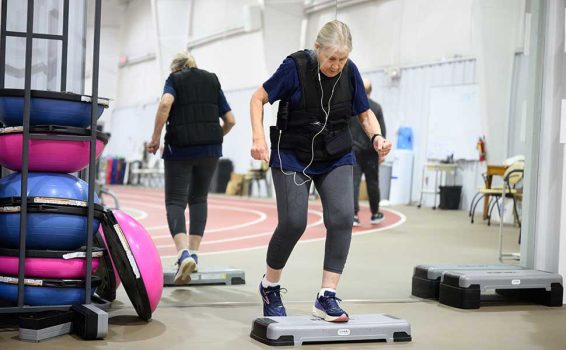
More time spent standing or stepping while wearing a weighted vest showed positive changes in bone mineral density, according to a new weight loss study from Wake Forest University.
It’s encouraging news for people trying to lose weight safely, especially older adults who want to drop pounds without losing bone or muscle mass.
The study, “Does time spent upright moderate the influence of a weighted vest on change in bone mineral density during weight loss among older adults,” appears in the peer-reviewed journal Frontiers in Aging.
Weighted vests can provide an external load equal to the amount of weight lost. Replacing that weight by wearing a vest can:
- Help the body prevent metabolic slowdown, assisting with weight-loss maintenance.
- Preserve muscle and bone, which is particularly important as we age. Losing bone and muscle increases the risk for fracture and disability.
Reaping more benefits of the vest
Researcher Jason Fanning, lead author of the study and associate professor of health and exercise science, analyzed data from Wake Forest University’s INVEST in Bone Health for this study. The randomized, controlled trial led by Wake Forest colleague Kristen Beavers looked at whether wearing a weighted vest could help preserve bone mineral density during one year of weight loss. Participants were divided into three groups, and the weighted vest group wore the vest at least eight hours each day.
What Fanning found:
- Weighted vest plus weight loss group: More time spent standing or stepping yielded positive changes in bone mineral density.
- Weight loss alone group: Standing or stepping more often showed negative changes in bone mineral density.
- Weight loss plus resistance training group: Time spent upright didn’t influence bone mineral density.
The researchers believe that spending more time upright exposes the wearer to more weight from the vest, thus reaping more benefits. The positive changes in bone density in the weighted vest group were promising enough that the INVEST research team is designing a new study. It will explore whether encouraging people to move more often boosts a weighted vest’s effectiveness in preserving bone mass.
“If we’re going to be putting vests on people, we need to train those people to be up and moving,” said Fanning, who also is a primary investigator in a current study looking at how movement affects pain from arthritis. “A vest can be a great tool. But, like any tool, it’s not going to do the work for you.”
Categories: Research & Discovery, Uncategorized
Media Contact
Alicia Roberts
media@wfu.edu
336.758.5237
Recent News