Acclaimed author and scientist Alan Townsend to head Wake Forest Sabin Family Center for Environment and Sustainability
HIGHLIGHTS
- Ecosystem scientist to serve as Sabin Center executive director
- Alan Townsend brings research, academic leadership and program-building experience
- The Sabin Center supports vital environmental and sustainability research worldwide
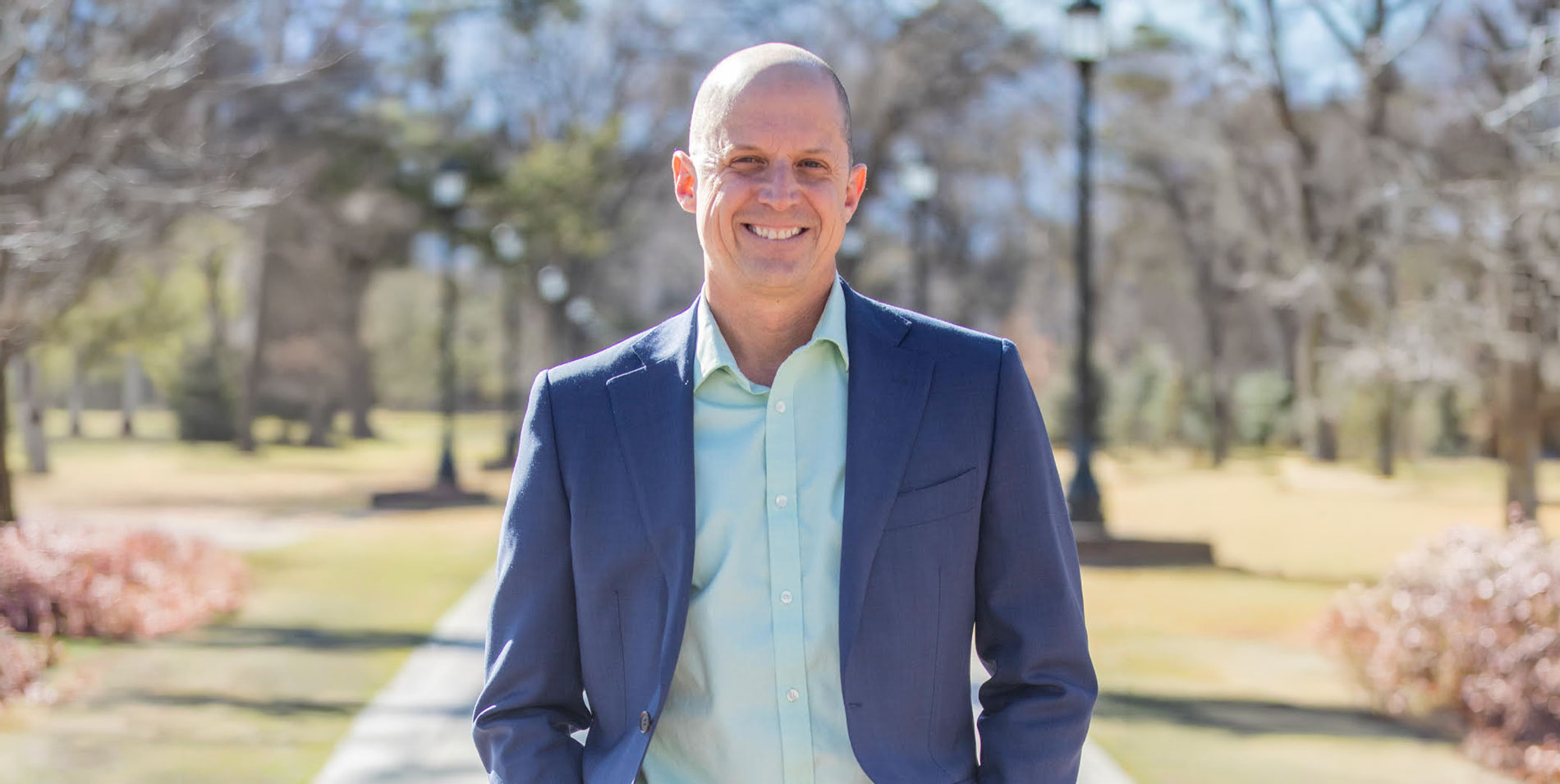
Prominent ecosystem scientist and author Alan Townsend, Ph.D., will lead the Andrew Sabin Family Center for Environment and Sustainability, Wake Forest University announced today following a national search.
Townsend will join the Sabin Center effective July 1. A highly collaborative organization focused on tackling environmental challenges through innovative partnerships, the Sabin Center has quickly become a leader in tackling complex environmental problems, with projects on deforestation and land conversion in the Amazon, illegal gold mining and mercury contamination, and supporting protected areas and working wildlands around the world, among others.
With a deep, multidisciplinary team of fellows and faculty affiliates, the Sabin Center supports vital environment and sustainability research and programming for scholars, as well as experiential learning opportunities for undergraduates regionally, nationally and internationally. Growing and supporting those partnerships and collaborations will be Townsend’s most important job.
“Attracting a scholar and leader of Alan Townsend’s caliber is a remarkable testament to what the Sabin Center has become – and to what it’s poised to be,” said Vice Provost for Research, Scholarly Inquiry & Creative Activity Kimberley McAllister. “The Sabin Center occupies a genuinely distinctive space – solution-driven, community-engaged and deeply rooted in rigorous science and scholarship – with a reach that extends from the Amazon rainforest to national parks across the globe. It takes an extraordinary leader to honor that identity while pushing it further. Alan’s rare combination of world-class research, program-building expertise and a gift for bringing science to the public is exactly what this Center needs to grow its impact. We couldn’t be more excited about what lies ahead.”
Harnessing the power of the University
The Sabin Center was named in 2023 thanks to a leadership gift of $5 million from the Andrew Sabin Family Foundation. An evolution of Wake Forest’s Center for the Environment, Energy and Sustainability (CEES), which launched in 2010, the Sabin Center harnesses the power of the University to address pressing environmental issues through:
- Supporting teams that apply novel technologies to prevent environmental destruction and reverse damage.
- Bringing together experts and stakeholders beyond academia to work together toward change.
- Partnering with global organizations to pursue more high-impact research and problem solving.
Townsend comes to the Sabin Center from the University of Montana, where he served as dean of the Franke College of Forestry and Conservation and professor of ecosystem ecology. He became the first provost of Colorado College in 2018, and oversaw research operations as associate vice chancellor at the University of Colorado Boulder, where he also directed the environmental studies program.
He has run research programs on tropical forests in the Amazon and Central America, and helped build multinational partnerships with Future Earth of North America and the North American Nitrogen Center.
A scholar who has dedicated his career to science outreach and communication, Townsend serves on the board of the National Outdoor Leadership School (NOLS) and appeared in the documentary series “Let Science Speak,” an effort that aimed to better humanize scientists and show how science matters in all of our lives. He authored a book in 2024, “This Ordinary Stardust,” to tell the story of how the wonder of science helped him find peace as his young daughter and wife faced treatment for brain cancer.
The Sabin Center appointment marks Townsend’s return to North Carolina, where he served as dean of the Nicholas School of Environment at Duke University from 2014-17.
He said he was drawn to the Sabin Center for the uniqueness of its approach: a solution-oriented center that remains very much engaged in the academic enterprise.
“The Sabin Center is a distinct entity in this field, one that in my view hits a lot of the right marks already in how higher education should engage with our global sustainability challenges,” he said. “It is both solution-focused and human-centered, founded and built on an understanding that protecting even some of our most wild places takes engaging people in multiple ways. Without question, solving the complex environmental issues we face as a species requires a good understanding of the natural world around us – but equally so, it requires an understanding of how people work, what motivates them, and how society can shift its decision making. The Sabin Center does a beautiful job of drawing the necessary expertise from many different corners, and I’m truly honored to join that effort.”
Initiating profound change worldwide
When the creation of the Sabin Center was announced, philanthropist and naturalist Andy Sabin praised Wake Forest’s model for taking teaching beyond the classroom and into labs as well as the world’s wildest places.
Indeed, the Andrew Sabin Family Foundation’s investment has created opportunities for faculty and students to initiate profound change worldwide. New programs have included an annual conference designed to advance the Center’s vision of a more sustainable, just and abundantly wild world.
“I am pleased and proud that such a distinguished scholar and environmentalist as Alan Townsend will lead the Sabin Center into the future,” Sabin said. “Nothing less than saving the planet has been central to my life’s work, which is why I chose to invest in Wake Forest’s vision for a solutions-driven center dedicated to that work. I’m confident that Alan’s expertise and experience are an ideal match for advancing the Center’s ambitious goals.”
Advancing research, building teams
With partners and collaborators who are noted experts regarding various environment and sustainability issues, the Sabin Center’s focus areas include:
- Environmental crises on tropical frontiers
- AI in a changing world
- Saving Earth’s last best places
- Exploring biodiversity and conservation, environmental law and policy, and impacts on people and place
Key initiatives have included Science for Parks and the Center for Amazonian Scientific Innovation (CINCIA).
Miles Silman, founding director of the Sabin Center and the Andrew Sabin Family Foundation Professor of Conservation Biology at Wake Forest, said Townsend has the “complete package” the Sabin Center needs in its new leader – an important research career augmented by experience translating that science into policy, advancing further research and building teams as a high-level administrator.
“We’ve built a center grounded in discovery, partnership and real-world change,” Silman said. “Alan brings the rare combination of an elite research career, a gift for public storytelling and deep administrative experience. He brings people together and builds programs across disciplines to solve hard, complex environmental problems. It’s exactly the kind of leadership we need to take the Sabin Center into the future.”
Training future generations
Townsend, who also will have a faculty appointment in the Department of Biology at Wake Forest, said he looks forward to working with the University’s talented students. He hopes to foster a passion for the environmental issues the Sabin Center addresses and an understanding that those issues touch everyone. They are core to the future of humanity as well as to success in their careers.
And it’s the embodiment of Wake Forest’s Pro Humanitate mission.
Recent News
On Earth Day: Here’s how economics can save the Rhinos
On Earth Day: Here’s how economics can save the Rhinos
Professor wins award to study color-changing plastic and shape-shifting springs
Professor wins award to study color-changing plastic and shape-shifting springs