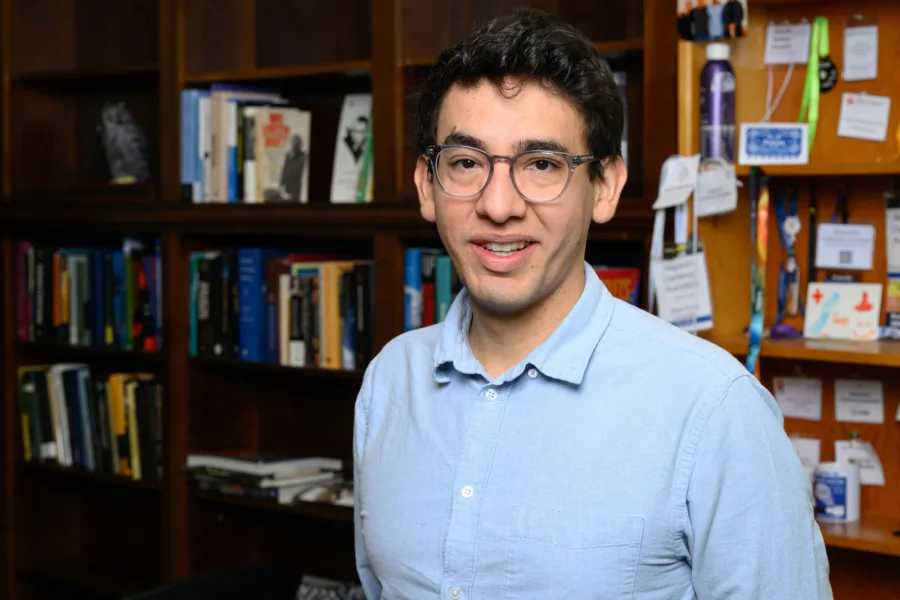
Here’s the truth. Honesty is getting harder.
In a world where deepfakes, misinformation and AI-driven cheating are commonplace, it is getting harder to be honest. Christian B. Miller, A.C. Reid Professor of Philosophy at Wake Forest University, explains why honesty is losing ground and why it matters.
“Failures of honesty are encouraged and incentivized in new and powerful ways,” writes Miller in his new book, “The Honesty Crisis: Preserving Our Most Treasured Virtue in an Increasingly Dishonest World.” Supported by a $4.4 million grant from the John Templeton Foundation, Miller previously led The Honesty Project, one of the world’s largest research initiatives on the topic.
A leading expert on the psychology and philosophy of character, Miller says it is particularly important to study honesty at a time when truth can be hard to discern and the consequences for lying become less significant.
What is honesty?
We naturally assume honesty is just about telling the truth and that’s the end of the story, but it’s actually a very nuanced and complex virtue. I think of honesty primarily as a virtue of character—something that influences how we think, how we feel and how we act.
Behaviorally, honesty has to do, of course, with telling the truth, but it also encompasses much more. It prevents stealing, cheating, misleading, BSing, hypocrisy, self-deception and promise-breaking all down the line. It’s extremely broad in scope and pertains to a lot of moral territory.
What are the factors eroding honesty?
The underlying cause I see of these honesty crises is newfound technology that’s facilitating dishonesty. Technology itself is neutral, but it gives us power and ability these days to do things we couldn’t do before, or to do them a heck of a lot easier than we could have done in the past. It gives us new capacities that facilitate greater dishonesty.
There could be other factors besides technological ones. You might worry about things like our religious values eroding, our moral values and standards eroding, or societal pressures and greater financial incentives or pressures to have a certain kind of lifestyle or make a certain kind of salary. It’s definitely multifaceted and multi-variable, but the one I am especially worried about is the technological factor.
Your new book is titled “The Honesty Crisis.” What makes our current moment in time an actual “crisis” that is distinguished from the struggles people may have always had with being truthful?
Although it’s been true for thousands of years that people have lied, cheated, stolen and the rest of it, what I’m seeing now is an acceleration of that kind of behavior, what I call an honesty crisis or really multiple honesty crises.
These honesty crises take a specific form. There are situations where we’re both tempted to be more dishonest than we have been in the past—it’s incentivized and more appealing than it was before—and at the same time, we’re also able to get away with the dishonesty easier than we could have in the past. It is simply harder to catch people being dishonest today. When you put those two things together, you’ve got a bad combination: greater temptation to be dishonest and easier means of being dishonest.
Why does it matter if we are honest or not?
The case for honesty is very compelling. Research has found that honesty is the single most important characteristic a person can possess when it comes to liking them, respecting them and understanding them.
At the societal level, I think we can all agree that living in a dishonest society is not something we want to be part of. If you live in a dishonest society, you are probably not going to be able to trust other people, and it’s really hard to live your life without trust. Furthermore, we can’t have deep and valuable relationships anymore. How could I have a deep and authentic, caring, loving relationship with other people if I know that everyone is dishonest?
Finally, when you know that most people are quite willing to steal from you, cheat you, or do other dishonest things to you, it’s going to be hard to have a peaceful mindset. Instead, you’re probably going to live in fear for yourself and for those you love.
What is the biggest incentive for being honest? For being dishonest?
On the honesty side, I think it comes down to relationships. Authentic relationships are extremely valuable and worth caring about. In fact, we do care about them a great deal. When we’re dishonest, we undermine those relationships.
On the dishonesty side, the biggest incentives come from situations where shortcuts are highly rewarded or easily hidden. People are tempted to be dishonest because it is more appealing than it was before and easier to get away with it. This can be fueled by societal pressures, greater financial incentives, or a desire for celebrity and fame. We can easily get sidetracked by a quick fix, cutting corners or caring about things that give us immediate gratification or advance our self-interest.
The good news is that we as human beings tend to default into a truthful mindset. We naturally tell the truth and it actually takes effort and cognitive resources to get us to lie. That doesn’t mean people never lie. Of course, that would be absurd, but it’s actually effortful and costly to tell a lie. It is so much more natural and easier psychologically for us to tell the truth. And this, I think, is very encouraging.
Learn more
See the On Topic page to hear more Wake Forest University experts discuss relevant topics and new research.
Recent News
Sabin Center conference explores leading in times of environmental crisis
Sabin Center conference explores leading in times of environmental crisis
North Carolina could play a key role in this year’s midterm elections
North Carolina could play a key role in this year’s midterm elections