
WFU establishes LGBTQ Center
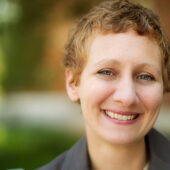 Angela Mazaris has been selected by Wake Forest to establish a Lesbian, Gay, Bisexual, Transgender, Questioning and Queer (LGBTQ) Center at the Reynolda Campus. The center will be a source of educational programming, support and advocacy for the entire campus community.
Categories: University Announcements
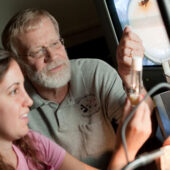 Biology professor William E. Conner has been named the first David and Lelia Farr Professor of Innovation, Creativity and Entrepreneurship. The $2 million endowed chair recognizes Conner's work in encouraging student start-ups.
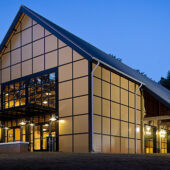 The Barn, a new gathering space for students, will officially open September 1 with a ribbon-cutting ceremony at 2 p.m. The approximately 6,000 square-foot building will be a venue for student-planned activities.
 "Electronics everywhere" is the trend of the future, says physics professor Oana Jurchescu. And new research into organic semiconductors means artificial skin, smart bandages and wearable electronics are one step closer.
 First-year students arrived on campus Friday to settle in to their dorms, find their way around campus and make new friends before the start of fall semester.
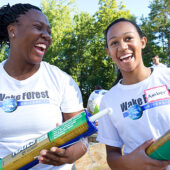 First-year students took part this week in a Wake Forest program to introduce them to volunteer opportunities and community agencies in the Winston-Salem area. See photos of students putting Wake Forest’s “Pro Humanitate” (for humanity) motto into action.
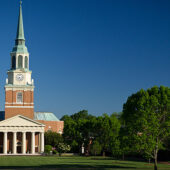 Wake Forest is opening its 2011-2012 academic year with a recently launched emergency website called Wake Alert. The centerpiece of a multi-faceted emergency alert system, Wake Alert is accessible to anyone at http://wakealert.wfu.edu.
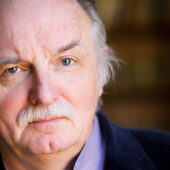 "As Labor Day approaches, there is little to celebrate about the state of American labor,” writes David Coates, Worrell Chair of Anglo-American Studies in the political science department, in an op-ed that appeared in Friday’s Charlotte Observer.
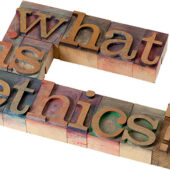 Breakthroughs in science and medicine have multiplied the ethical questions confronting this generation of college students. With its 2011 summer reading assignment, Wake Forest seeks to engage incoming students in thorny bioethics issues, while also addressing broader ethical issues in society.