
Tracing the roots of ‘The Dream’
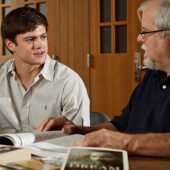 Wake Forest student William Murphy (’13) and Associate Professor of Communication John Llewellyn recently discovered that the most significant American speech in recent history was based on a teenage dream – one Dr. Martin Luther King, Jr. first envisioned and articulated as a 15-year-old schoolboy in the Jim Crow South.
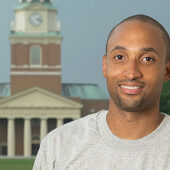 ACC basketball legend Randolph Childress has returned to Wake Forest as an assistant to the director of athletics, focusing on compliance, fundraising and the mentoring of student athletes.
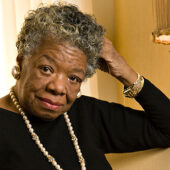 Directed by Maya Angelou, a Presidential Medal of Freedom honoree, twelve students recently shared 44 poems in a dramatic performance at Brendle Recital Hall. The poems were selected as favorites from their summer course with Angelou. (includes video)
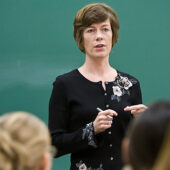 If only we could blame drought and poverty for the famine in the Horn of Africa that would be so simple, says Sarah Lischer, associate professor of political science who studies humanitarian aid and refugees in Africa. In the Huffington Post, Lischer explains why Western aid won’t save Somalia.
 If intelligence agencies could have accurately predicted the events of 9/11, imagine how world history would have changed. Eric Stone, an associate professor of psychology, is working on a crowdsourcing project to find ways to help experts make more accurate predictions. Read media coverage of the project and find out how you can participate.
 Steve Dixon ('82) and his wife have spent much of the last year telling the story of one family caught up in the U.S. immigration process. On Monday, he witnessed the reunion of the Wasilewski family, the subject of the documentary “Tony and Janina’s American Wedding."
 Mercy Eyadiel, executive director of employment development, offers tips to help students turn their summer internships into full-time employment.
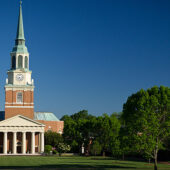 Wake Forest and the Winston-Salem Chamber of Commerce are partnering to offer 25 minority businesses one year of free Chamber membership. The program will assist the growth and development of minority and women-owned businesses.
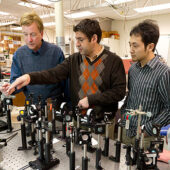 Using a crystal ball to protect homeland security might seem far-fetched, but researchers at Wake Forest University and Fisk University have partnered to develop crystals that can be used to detect nuclear threats, radioactive material or chemical bombs more accurately and affordably.
 With an esteemed group of faculty, Wake Forest often is a source for the media on important news topics. Recently, professors David Coates and John Llewellyn spoke with the media about the U.S. debt ceiling debate.