
Three WFU students named 2021 Goldwater Scholars
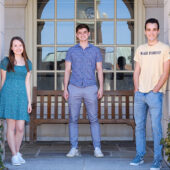 Joseph McCalmon, Ashley Peake and Samuel Schwartz have been named 2021 Barry S. Goldwater Scholars. The three are among 410 college students from across the U.S. to receive the award for the 2021-22 academic year.
Categories: Awards & Recognition, Experiential Learning, Mentorship, Research & Discovery
 A recent Pew Research study found that just 20% of U.S. adults say they trust the government in Washington to “do the right thing” just about always or most of the time. Health care professionals, lawyers and business leaders also rely on mutual trust with those whom they serve to succeed in their careers.
 Wake Forest biologist Dave Anderson is among a global team of researchers contributing to a new study showing that albatrosses and closely related seabirds spend 39% of their time on the high seas where no single country has jurisdiction.
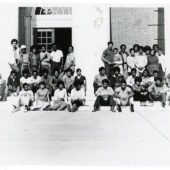 Wake Forest University has established a new center to give critical, intellectual voice to the experience of African Americans through research-driven initiatives, programming and community facing work.
 While celebrating her life and iconic autobiography “I Know Why The Caged Bird Sings,” Wake Forest University officials, famous African Americans and her son paid tribute to renowned author and longtime University professor Maya Angelou.
 As Wake Forest prepares to launch its African American Studies Program this fall, an anonymous donor has made a $1 million gift to support the new academic initiative.
 Wake Forest faculty in the Center for Energy, Environment and Sustainability, and its Center for Amazonian Scientific Innovation (CINCIA) are part of an award-winning research team working to provide new technology that could help eliminate the environmental and human costs of illegal gold mining.
 As the total number of COVID-19 cases in the U.S. exceeds 15 million and cases surge to record levels in places around the world, understanding the pandemic and its ongoing impact remains critically important.
 For those feeling disoriented by the events of 2020, understanding “zozobra’ may help, said Wake Forest assistant professor of philosophy Francisco Gallegos.
 Wake Forest has been recognized by the Institute of International Education (IIE) and Diversity Abroad for increasing access to global experiences for all students.