Female Galápagos seabirds have flings, and males seem OK with it
WFU biologist publishes new research on Nazca boobies
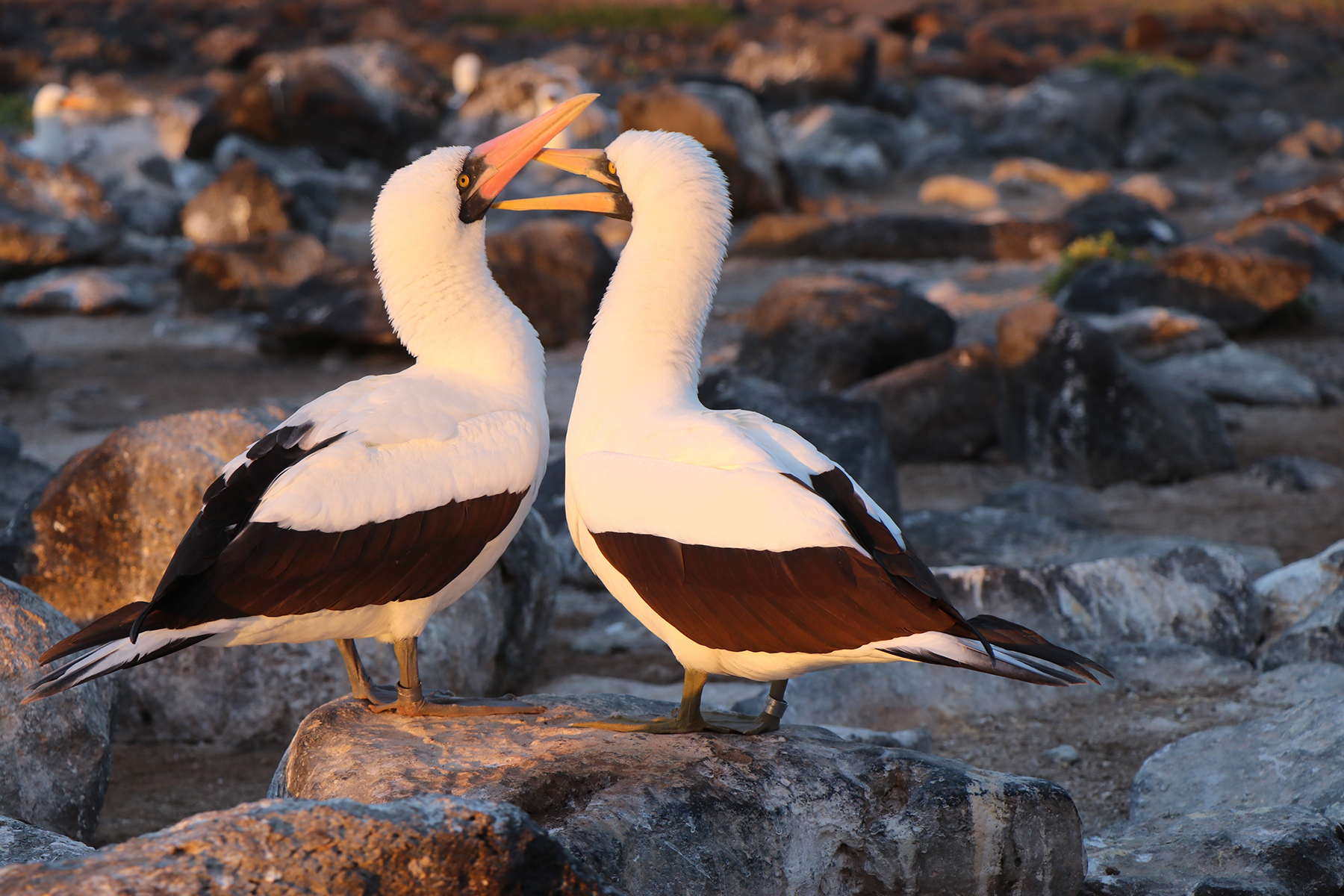
Perched on a plastic chair overlooking a colony of Nazca boobies in the Galápagos Islands, researcher David Anderson carefully studied the seabirds.
Anderson, a research professor and professor of biology emeritus at Wake Forest University, was shocked to discover that female Nazca boobies had hundreds of conspicuous sexual liaisons with multiple males. And, their promiscuity did not ruffle the feathers of their eventual nesting partners.
The findings, detailed in the new research study in PLOS One, “Female sexual agency and frequent extra-pair copulations, but no extra-pair paternity, in Nazca boobies,” are challenging long-held understandings of sexual power dynamics in the bird world.
His study produced possibly the first-known evidence of female birds showing complete sexual control aside from lek-mating species; in leks, males perform elaborate courtship rituals to attract females, and females shop openly among those males.
The findings counter the view of seabirds as “models of monogamy” that has long influenced scientific understanding of avian social structures.
“Many seabird species have long-term pair bonds, and they have these extended courtship periods and shared parental care,” said Anderson, who has been studying seabirds like boobies and albatrosses for more than 40 years. “You don’t expect to see females just running back and forth trying to copulate with so many males. So yeah, that’s a huge surprise. This mating system has some similarity to the lek arrangement as far as females’ sexual agency.”
Most females had a handful of sexual partners during the 74-day observation period, including the eventual father of their offspring, and the most active one had 16 partners.
“That’s just mind-blowing for a seabird,” Anderson said. “Many of these female boobies are really freewheeling it when it comes to sexual behavior.”
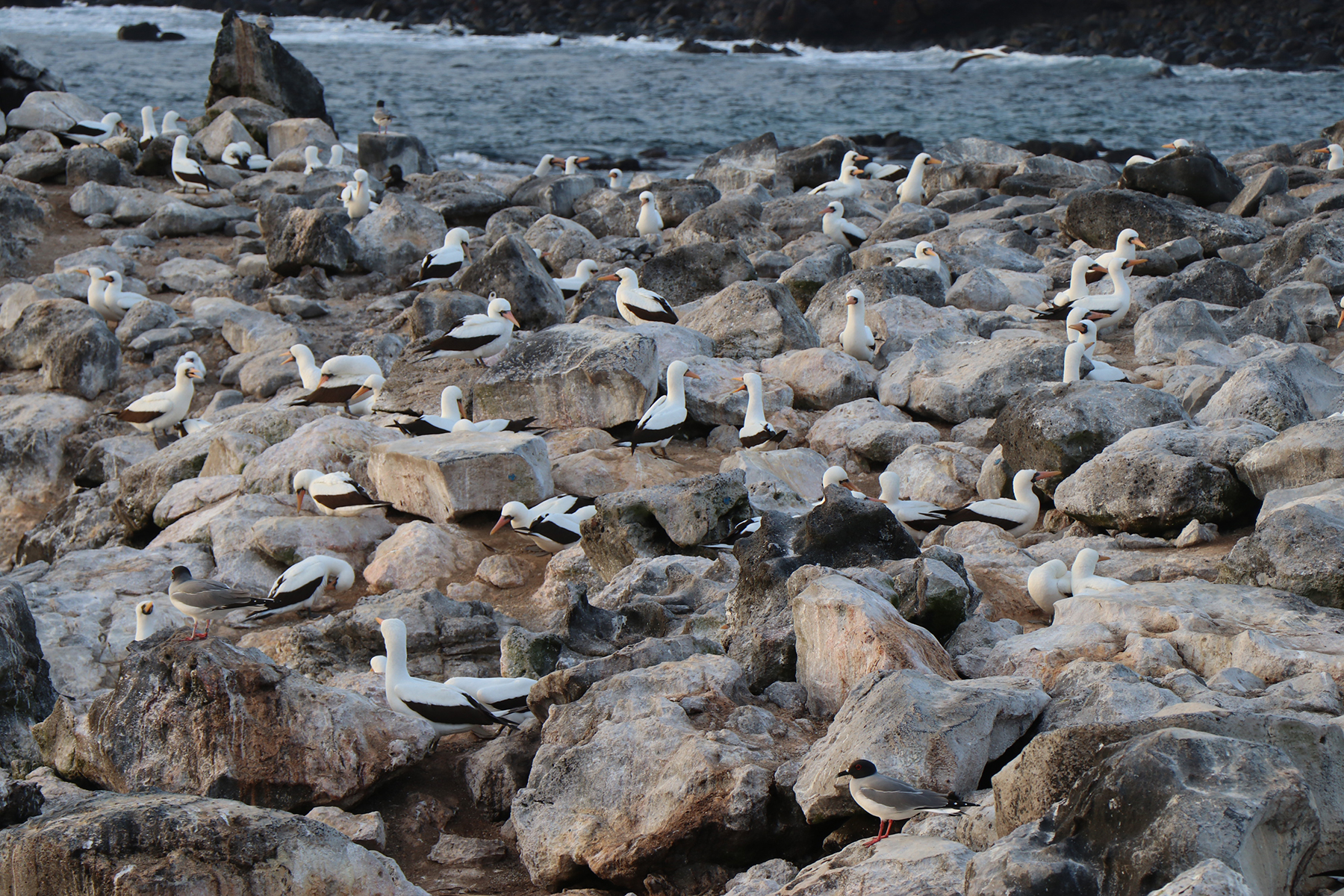
He attributes their sexual freedom to the females’ power in the colony, both physically and logistically. Female Nazca boobies are larger and stronger than the males, and there are fewer females, making it difficult for an overabundance of males to find a partner.
That power imbalance allows females to have sex with neighboring male birds in front of their eventual partner without repercussions. In most species, Anderson says, male birds have more physical power and can injure or abandon a female partner that has sex outside the couple. That coercion causes female birds in most species to conceal their outside sexual relationships.
Nazca booby females, however, can have “whatever sexual behavior is best for them, and there’s nothing the males can do about it,” Anderson said. “The males are afraid of the females, and also won’t risk alienating a female since there are so few of them.”
In a surprising twist, the study found that female Nazca boobies have more sex with their eventual breeding partner, and the rate of sex outside that relationship falls to near zero, when they’re ovulating and ready to make babies.
“She’s copulating with other males in the lead up to the breeding season, but genetic data showed that they’re never the father of her children,” Anderson said. “This reconciles evidence that females are shopping around, but it never results in fertilized eggs in the end. These flings are sex, but not reproduction.”
“This is sort of pushing the envelope on the females controlling their own destiny in reproduction and males just accepting the outcome,” he added.
Anderson’s study is part of a long tradition of researchers trying to understand family dynamics in birds. Among vertebrates, birds are the easiest to observe because researchers know exactly where they live and much of their behavior is easy to observe. In many bird species, like Nazca boobies, the parents have a pair bond throughout a long breeding season, with all of the relationship intricacies, including cooperation and conflict, that go with that.
Anderson plans to continue the study and try to find out why female boobies choose to have so many sexual partners, yet only one father for their babies.
“Why are these females doing it, if it’s not leading to a fertilized egg?” he said. “We would very much like to know the answer to that.”
—Contributed by Kelly Hinchcliffe
Recent News

Professor wins award to study color-changing plastic and shape-shifting springs
Professor wins award to study color-changing plastic and shape-shifting springs
Beyond the screen: Digital literacy and brain health
Beyond the screen: Digital literacy and brain health