Eroding coastal marshes leak billions of pounds of carbon, new research finds
Wake Forest-led study pinpoints a hidden carbon source stretching from Texas to Maine
HIGHLIGHTS
- U.S. coastal marsh erosion releases 660,000 metric tons of carbon annually, a carbon feedback loop that increases greenhouse gas emissions and accelerates atmospheric warming and sea level rise.
- Wake Forest researchers harnessed satellite imagery to estimate carbon loss through marsh erosion.
- While new wetland growth offsets some carbon, net marsh erosion still releases 380,000 metric tons each year.
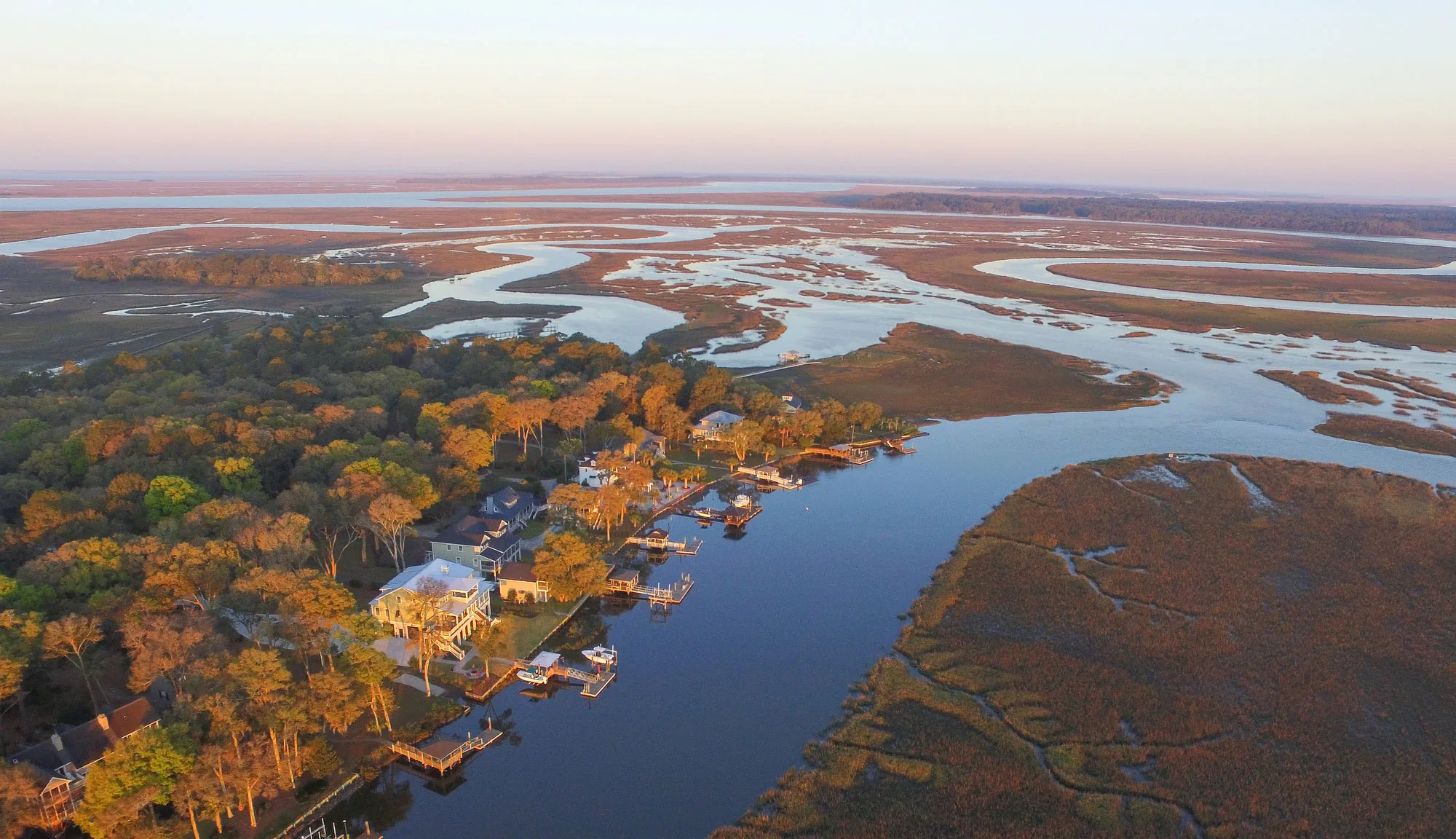
While rising sea levels, fierce storms and shoreline development eat away at wetlands along the U.S. Atlantic and Gulf coasts, the eroding soils dump 660,000 metric tons of carbon pollution into the ocean every year, according to new Wake Forest University research.
That carbon can create a more acidic ocean, endangering oyster and clam growth as well as fish nurseries. It provides a pathway for more carbon dioxide to enter the atmosphere, contributing to rising temperatures.

It’s a situation that many environmental planners haven’t accounted for as they devise strategies for battling climate change.
Principal investigator Courtney Di Vittorio, associate professor in the Department of Engineering, said this is the first study to estimate carbon transfer, or flux, into the ocean from coastal marsh erosion in this region.
“This is a first step in advancing global ocean climate models,” she explained. “We have some good land models and we have some good ocean models, but linking them is pretty hard. This research begins to link land and ocean models for better planning around carbon emissions and climate mitigation efforts.
“It also gives us a rough estimate of an additional carbon benefit of preserving coastal wetlands.”
New marsh growth offsets some carbon release
The research was funded by a $540,000 grant from NASA’s Ocean Biology and Biogeochemistry program.
Using Landsat satellite images of the Earth’s land surface and LiDAR elevation estimates, researchers determined marsh loss along the U.S. Atlantic and Gulf coasts from 1985 to 2022.
They found that coastal marsh erosion has released more than 1.45 billion pounds, or 660,000 metric tons, of carbon into the ocean each year over those 37 years.
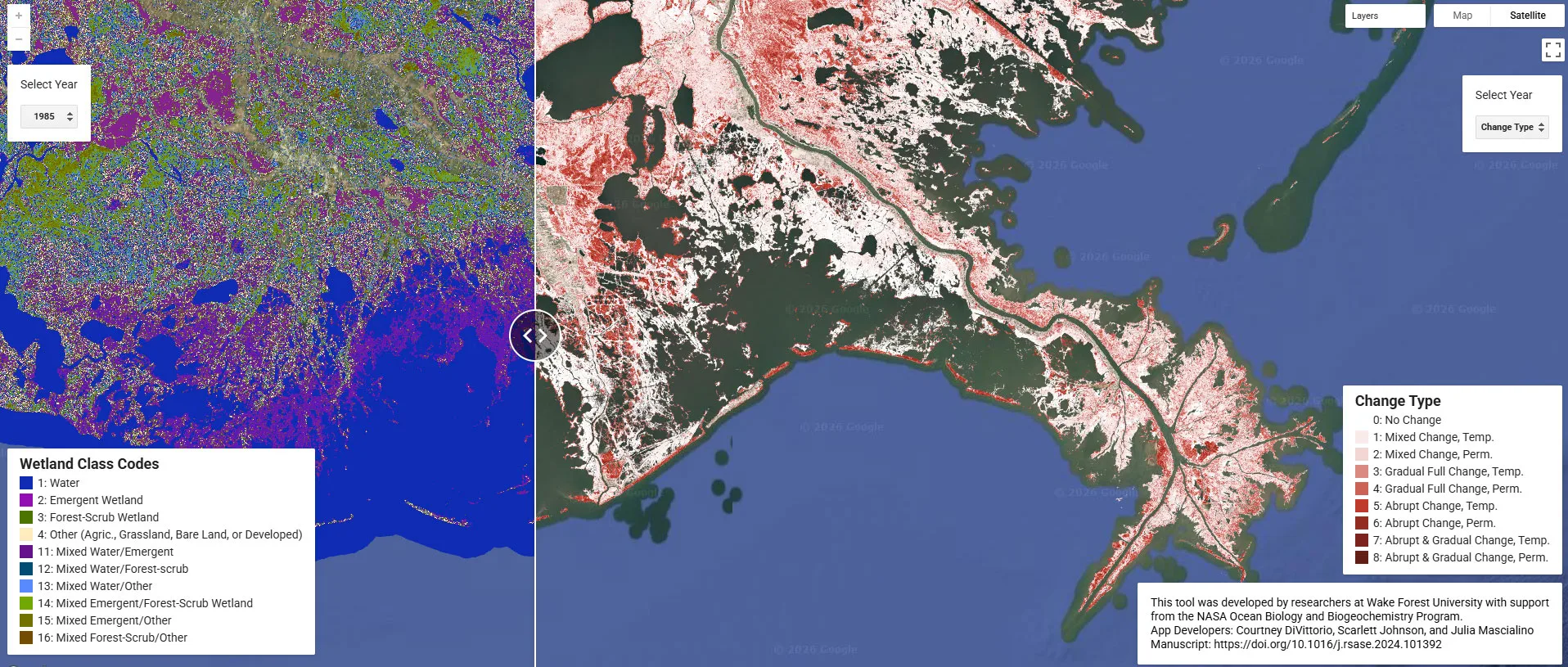
And, although new marsh growth has offset some of the carbon released by erosion, the loss of buried carbon still totals more than 830 million pounds, or 380,000 metric tons, annually.
River runoff releases the bulk of the carbon that ends up in the ocean. The amount of carbon released from coastal marsh erosion represents about 5.7% overall of the release from rivers, but can range from 3.3% to 13.8% regionally.
“That’s pretty significant if you’re comparing it,” said Di Vittorio, who is a faculty affiliate of Wake Forest’s Andrew Sabin Center for Environment and Sustainability. “The bulk of the carbon that enters the coastal ocean comes from inland runoff that goes into our rivers, which then goes out to the coastlines.”
Di Vittorio’s research team included Scarlett Johnson, Jacob Louie, Julia Mascialino, Esteban Coyoy Cifuentes and Alex Schluter, all undergraduate researchers from the engineering department; and graduate students Melita Wiles and Saeed Movahedi from the statistics department. While an undergraduate at Wake Forest, study co-author Aidan Norris helped to develop and implement the workflow for estimating the depth of marshes that erode.
Future research could focus on the primary drivers of coastal marsh erosion and on modeling the potential future rates of erosion under alternative climate scenarios.
Recent News

Celebrating 20 years of undergraduate research and discovery
Celebrating 20 years of undergraduate research and discovery
What the neuroscience of motivation has to say about GLP-1 drugs
What the neuroscience of motivation has to say about GLP-1 drugs