Sustainability grad student sets example
The Master of Arts in Sustainability program, an interdisciplinary one-year program that gives students and early to mid-career professionals the diverse skillset they need to work in the global sustainability marketplace, will graduate its first students this year. Categories: Enrollment & Financial Aid, Environment & Sustainability, Experiential Learning, Research & Discovery
From bats to blue-footed boobies and beyond, 2014 was a memorable year for Wake Forest when it came to science and technology news.
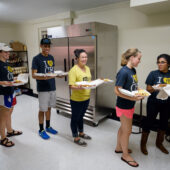
The busiest time of year at the Campus Kitchen is the week before Thanksgiving as students, faculty and staff come together for Turkeypalooza. Now in its 8th year, Turkeypalooza is a week-long event in which more than 150 volunteers cook locally-sourced Thanksgiving dinners for food-insecure Triad-area residents.
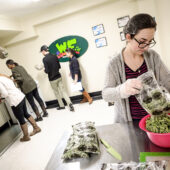
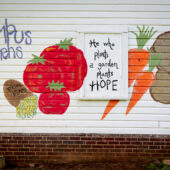
Justice. Politics. Access. Quality. Insecurity. Production. Deserts. Sustainability. One word that connects all of these words is FOOD. At Wake Forest, references to these terms – food justice, food quality, food politics – can be found everywhere, woven into the fabric of students’ lives through their course work, extra-curricular activities and service learning opportunities.
On Friday, Sept. 19, the Campus Kitchen at Wake Forest University will hold a grand opening for its new home in the heart of campus. Officially opening its doors in 2006, the Campus Kitchen at Wake Forest has continued to grow every year since.
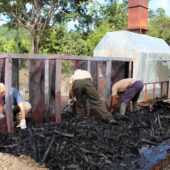
A solution to reverse Amazon rainforest deforestation is being explored by Wake Forest researchers by creating a new and more effective version of biochar made from native bamboos. Biochar is a kind of fertilizer made by smoldering agricultural plant waste in a specially designed, zero-oxygen kiln.
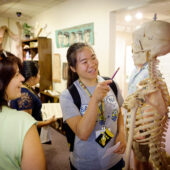
From lectures to team building to serving in the community, 51 students from 15 states get a taste of college life at LENS@Wake Forest, a three-week pre-college sustainability program.
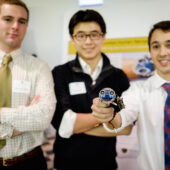
From improving the lives of people suffering from debilitating diseases to turning waves in the Reynolds gym pool into electricity, Wake Forest researchers raised the bar of scientific excellence yet again during the 2013-2014 academic year.
The key to developing drought-resistant tomatoes may be hidden in the genes of their ancestors. Rising junior Kathleen DiNapoli is on a hunt to find it.