Top of page

Why organized crime is targeting the Amazon

Wake Forest University faculty, staff, and guests from other higher education institutions attend the Sabin Center Fall 2026 Conference in the Sutton Center on Thursday, November 5, 2026. Executive Director of the Wake Forest University’s Center for Amazonian Scientific Innovation (CINCIA) Luis Fernandez moderates a panel called ‘Organized Crime, Environmental Chaos’ which includes Program Director for Environmental Crime and Illicit Finance at the FACT Coalition Julia Yansura, Principal and Founder Solow, PLLC Steve Solow, and Homeland Security Investigations (HSI) Natural Resources and Extractive Commodities (NREC) Section Acting Section Chief Todd Schoenberger.

With organized criminal networks increasingly tapping into environmental crime as a very lucrative income source, Wake Forest University’s Sabin Center for Environment and Sustainability highlighted the issue and potential solutions during its annual conference on Thursday. “We estimate that environmental crime is the third-largest criminal economy in the world in terms of proceeds generated,” said…


Solar energy center begins operations with support from Wake Forest University

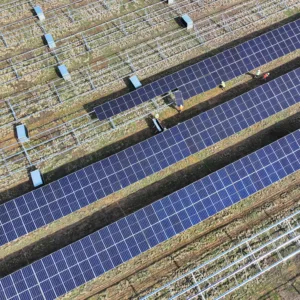
Solar panels in a field.

Wake Forest University and eight other colleges and universities in North Carolina and Pennsylvania have collaborated to bring a western Kentucky solar energy center online. A subsidiary of NextEra Energy Resources, LLC developed the Sebree Solar II Energy Center in Henderson County, Kentucky; the project became operational on Aug. 7, 2026. The 150-megawatt solar facility…


Sabin Center conference explores leading in times of environmental crisis

When systems shift in times of crisis, leadership needs change, too. For its annual fall conference, Wake Forest University’s Sabin Center for Environment and Sustainability highlights resilient leadership approaches to navigate these challenges, from research and innovation to storytelling and brand-building. “Sustainable, Just and Abundantly Wild: Resilient Leadership for Our Era” features expert scientists, business…


Wake Forest-CINCIA researchers brief pope on Amazon mercury pollution

Scientists from across the Amazon have delivered to Pope Leo XIV a briefing on mercury pollution in the region—documents that include the findings from decades of research at the Center for Amazonian Scientific Innovation (CINCIA), established in partnership with Wake Forest University’s Sabin Center for Environment and Sustainability. “Today we were able to put more…


Mapping the Forest

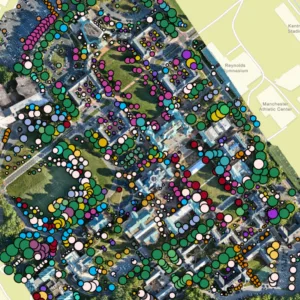
It took one drone, 300 million laser data points and seven teams of students on foot to map Wake Forest University’s trees.   Led by Ovidiu Csillik, an assistant professor of remote sensing in the environment and sustainability studies program, the project produced a publicly accessible, interactive 3D digital map of more than 1,000 trees and…


On Earth Day: Here’s how economics can save the Rhinos

As the world marks Earth Day, a troubling paradox has emerged in the fight to save one of the planet’s most iconic species. Data from the December 2025 CITES CoP20 global forum—a gathering where governments worldwide set the rules for international wildlife trade—highlights a startling trend. While South Africa’s anti-poaching and anti-trafficking efforts yielded a…


The shepherd of Robinhood Road

On a cold December morning in Winston-Salem, North Carolina, activist, artist and filmmaker Joel Tauber walked with Rebecca and Sarah, guiding them with a firm grip as they dashed across Robinhood Road during morning rush hour. People honked their horns and waved as they drove by, drawn by the unusual sight of two sheep on…


Heat waves are here. Can tomatoes keep up?

While nothing says “summer” quite like the taste of a perfectly ripe tomato, excessive heat during the growing season can prevent tomato plants from bearing fruit. Gloria Muday, the Charles M. Allen Professor of Biology at Wake Forest University, studies tomatoes and how to make them more heat-resistant. Her research laboratory focuses on understanding the…


The plastic problem: How to solve it

Plastic is a product that is ubiquitous in today’s society, says Sarah Morath, Wake Forest professor of law and author of the book “Our Plastic Problem and How to Solve It.” The World Bank estimates that every person on the planet generates an average of 1.6 pounds of plastic waste daily. Morath explains the extent…


Wake Forest News

336.758.5237

Meet the News Team »

Archives