Media Advisory: Wake Forest students decorate desks for children
Categories: Campus Life, University Announcements

Categories: Campus Life, University Announcements
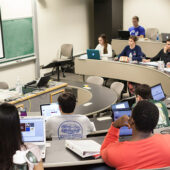 Students enrolled in Wake Forest’s Master of Accountancy (MSA) program find themselves in a prime spot to be vital resources to American taxpayers and businesses as millions of Americans line up hoping for a tax-refund from Uncle Sam.
Categories: University Announcements
Categories: Campus Life, University Announcements
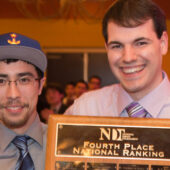 For the first time in the history of Wake Forest debate, three teams made the sweet 16 out of 78 teams in the National Debate Tournament — signalling the start of another successful chapter in a long history of winning debaters.
Categories: Campus Life, University Announcements
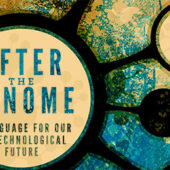 Medical advances in biotechnology seem to be coming faster than the public can understand them or even discuss how society should handle ethical, legal and moral considerations. To spark the national conversation, Wake Forest has partnered with Baylor to host “After the Genome: The Language of our Biotechnological Future” April 12-13.
 Categories: Happening at Wake, Mentorship, Research & Discovery, University Announcements
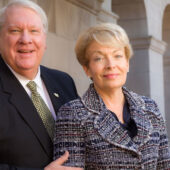 Dr. Steven and Becky Scott have committed $6.5 million to further the education of first generation college students through Wake Forest’s Magnolia Scholars program, benefiting students who are the first in their families to attend college. It is the second largest commitment to scholarships by individuals in Wake Forest’s history.
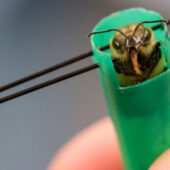 You can’t teach an old dog new tricks, but this might not be the case for a honeybee. Just ask David Hale (’15), a sophomore biology major. Hale has been studying the relationship between brain structure and cognitive function in honeybees since his freshman year.
Categories: Campus Life, Experiential Learning, Happening at Wake, Mentorship, Research & Discovery, University Announcements
 As Congress considers comprehensive immigration reform, new research by sociologist Hana Brown shows language used in the immigration debates can be as important as the legislation. Junior Le ‘Ron Byrd works with Brown on the next phases of her research.
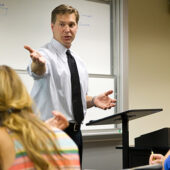 Bloomberg Businessweek ranked Wake Forest's undergraduate business program No. 1 in the nation for academic quality and among the top 20 programs overall for the fifth consecutive year. "The Best Undergraduate Business Schools" ranking report was released on March 20.
 Categories: Awards & Recognition, University Announcements