Humanities at heart of education
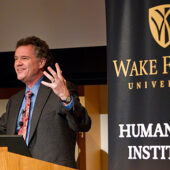
The humanities aren’t an idea whose time has passed, but a content-rich trove of knowledge that should be actively shared to help students and others understand the past and present, historian Edward Ayers said during his keynote address Friday at the official launch of Wake Forest’s Humanities Institute.Categories: Happening at Wake, Research & Discovery

As images of the devastation in Japan fill television screens, it's important for parents to take the time to address whatever questions and fears their children may have about an earthquake or tsunami affecting their lives, says psychology professor and child-development expert Deborah L. Best (’70, MA ’72).
On St. Patrick’s Day, Jeff Holdridge, director of the Wake Forest University Press -- the premier publisher of Irish poetry in North America -- discusses the future of Irish poetry after "The Troubles" and shares his five favorite Irish poems.
The importance of the humanities to a liberal arts education will be on full display during a two-day symposium marking the official launch of the Wake Forest Humanities Institute on Friday and Saturday. Two nationally known advocates for the humanities — historian Edward Ayers and author Stanley Fish -- will discuss “The Humanities in the 21st Century.”
Sixty percent of Wake Forest students study abroad before graduation. Immersed in Spanish history and culture, junior Jenny Reed is spending this semester in Salamanca, Spain — one of the many programs available through the Center for International Studies.
Creation narratives from Genesis are sometimes interpreted as giving humans domination over the earth. But what if instead that language has implications for stewardship rather than control? Questions like this and others related to feminism and the environment will be explored during the Phyllis Trible Lecture Series to be held March 1 and 2 on the Reynolda Campus.
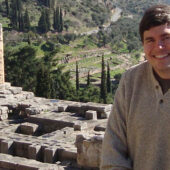
Philosophy professor Christian Miller traveled to Greece to share the latest Western research on morality with colleagues from China. After the experience, he hopes to incorporate more material from Chinese traditions into his classes at Wake Forest.
Sharon Andrews and her colleagues in the theatre and dance department would like to make the University Theatre the community’s theatre. Andrews, who is directing the "The Grapes of Wrath” on the Mainstage Theatre, has included undergraduates, graduate students and faculty and staff in the production and related events.
If you visited the Mainstage Theatre during one of the many rehearsals for Grapes of Wrath, you would have found senior Suzanne Spicer with her big book — making sure lighting cues, prop usage, costume changes and the entrances and exits of all the performers have been meticulously noted for every act and scene.