
Drought, climate change impact salamanders
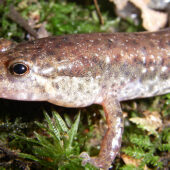 On the heels of one the worst U.S. droughts in more than half a century, a new study by Wake Forest researchers raises questions about the future of one of the most integral members of stream ecosystems throughout the Southeast – the salamander.
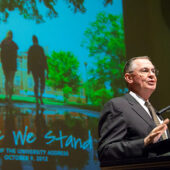 With its strategic plan, Wake Forest charted its path to staying comparable to its best peers, but keeping its priorities and culture distinct. In his annual State of the University speech, President Nathan Hatch outlined Wake Forest's progress along that path.
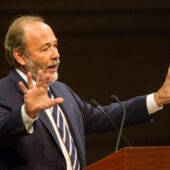 Service is the key to rekindling the American Dream, Time magazine columnist and bestselling author Joe Klein said in his Oct. 10 speech in Wait Chapel. He also shared stories from more than 40 years as a journalist covering politics and wars.
 Dean Franco uses literature to help his students change the way they see the world. In his new book, "Race, Rights and Recognition," he explores how great writers can alter the way we understand the social and racial challenges of modern Jewishness.
 More than 30 of Ray Kuhn's former students, plus their spouses or significant others, gathered in Clemmons last month to celebrate their mentor’s 70th birthday and their shared experiences as his research partners. Kuhn's work as a mentor has grown a close-knit group that spans generations.
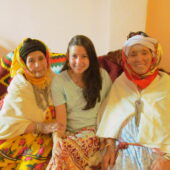 Inspired by the tattoos on her Algerian grandmother’s face, Yasmin Bendaas ('13) wanted to know more about how this custom began, and why it is disappearing. With the help of the Richter Scholarship and a Pulitzer Center for Crisis Reporting fellowship, Bendaas spent the summer in Algeria researching.
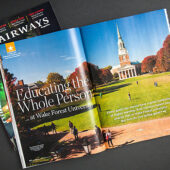 In the October issue of U.S. Airways Magazine, a 98-page spread positions Winston-Salem as a hub for arts and innovation, showcasing more than two dozen local educational institutions, arts organizations, restaurants and other attractions – Wake Forest chief among them.