
Faculty House Calls
 On August 30, more than 40 faculty members representing 13 academic disciplines visited first-year students in their residence halls. Each faculty pair, along with a residence life and housing staffer, welcomed an average of 60 students in the Class of 2016 through a program called Faculty House Calls.
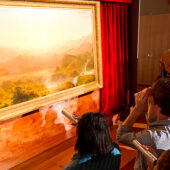 For 10 years, Wake Forest and Reynolda House Museum of American Art have worked together to form academic connections – a relationship that showcases how a liberal-arts education mindset joins knowledge and resources in surprising ways.
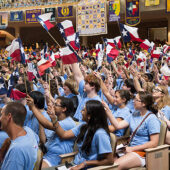 In July, Wake Forest was proud to host the 59th annual National Junior Classical League convention, helping to plan the event and providing faculty presentations, as well as giving the students a taste of the Demon Deacon lifestyle.
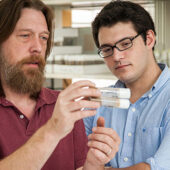 Erik Johnson’s latest study, which appears in the current issue of the Genetics, uses the fruit fly to look at enzyme signaling as a key to developing new treatments for diabetes and as an aid in all sorts of metabolic research, including weight-loss drugs.
 This summer, Wake Forest is home to 12 scholars from Spelman College, America's oldest historically black college for women. The scholars have teamed up with faculty in chemistry, communication, English, psychiatry and psychology to conduct research throughout the university.
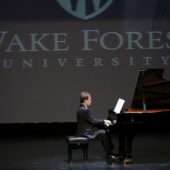 “We wanted to introduce Wake Forest to China as we look for opportunities to create educational programs in the future,” said Linda McKinnish Bridges, associate dean of admissions. “Not only opportunities for students from China to learn about Wake Forest, but opportunities for Wake Forest students to study abroad or find careers in China.”
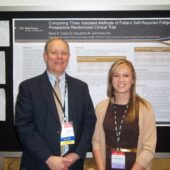 Presenting research to the largest gathering of cancer professionals in the world is an unusual opportunity for an undergraduate student. Junior Katherine Sams got to do it thanks to the mentor she met in her first-year seminar.
 In 2002, euro notes and coins began circulating in the European Community, and for the 10 years since, economists have asked if the monetary union was a good decision. One intensely debated question: What if the United Kingdom had adopted the euro? A student/faculty team answer the question.
 A look back at events on campus last year includes a conference for higher education administrators to contemplate what success means for college graduates, writers sharing their craft, and technological and entrepreneurial innovation through a variety of speakers.
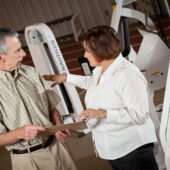 Building on the results of short-term studies showing the benefits of strength training on knee osteoarthritis (OA), professor of health and exercise science Stephen Messier will lead a five-year study to learn what level of strength training will help older adults the most.