
Hunger, not a game
 Rather than putting a Band-Aid on a wound, Wake Forest students, faculty and staff continue to take a proactive approach in preventing and eradicating hunger and bringing about systemic change.
Categories: Campus Life, Community Impact, Environment & Sustainability, Experiential Learning, Pro Humanitate
 Katharine Brooks recently joined Wake Forest as the executive director of the Office of Personal and Career Development. In this Q&A, Brooks, the author of “You Majored in What?”, shares her ideas about career development and best tips for choosing a major.
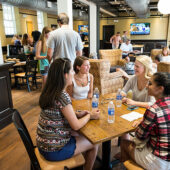 Zick’s, the newest social and dining destination on campus, is a place for students, faculty and staff to unwind. The space is conveniently located on the first floor and basement levels of Poteat Residence Hall, right off Hearn Plaza.
 Stand in the courtyard between Wake Forest’s Dogwood and Magnolia Halls and look south. The view of the iconic Wait Chapel, framed on either side by the recently completed buildings, is jaw-dropping. The mirror image Dogwood and Magnolia are the newest residence halls on campus.
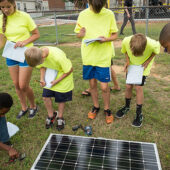 The Hybrid Sterling Energy Generator (HySterE) panel is one of the world’s first combined photovoltaic and thermal collection generators. Developed by researchers at Wake Forest, it could transform how we use the sun’s energy.
 Senior Lizzie Woods spent 10 weeks researching 20th century censorship and the Hollywood Production Code. Originally interested in book censorship, Woods found herself intrigued by the film and soon learned that during the 1930s, film censorship was getting stricter while books were more becoming more obscene.
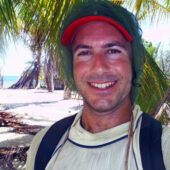 The amphibious mangrove rivulus is an extraordinary fish. It can survive out of the water for up to 66 days. Ph.D. student Benjamin Perlman is shedding new light on how the 3-inch rivulus moves across the ground once it gets there.
 This summer, junior Alex Buchholz lived in Azerbaijan and studied the relationship of energy and political outcomes in Central Asia. His research focused on the political ‘game’ newly independent states, Russia, and the United States have played over the control of oil and gas reserves.
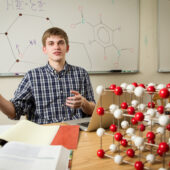 Senior Brian Shoemaker is helping a national team of scientists answer a million-dollar question: Could a substance that resembles baby powder curb global carbon emissions?
 Law professor Tanya Marsh recently testified before the U.S. House Committee on Oversight and Government Reform regarding the impact of Dodd-Frank. Her testimony was based on a report she co-authored with Joseph Norman (’12), her former student who is now an attorney in Charlotte, N.C.