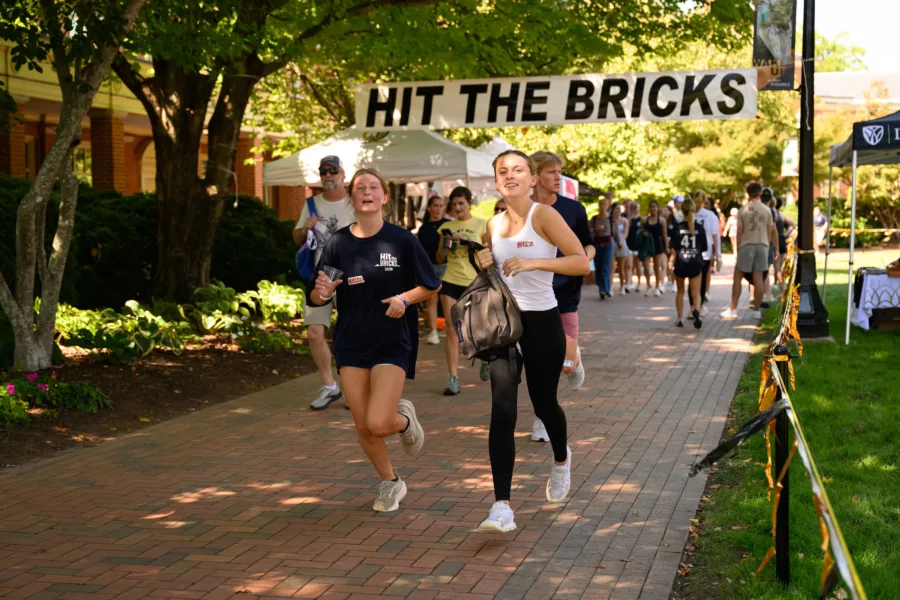
Students become partners, not just volunteers, at Generations Center
Making community connections with Wake Forest’s award-winning Creative Care seminar
HIGHLIGHTS
- An Intergenerational Center for Arts and Wellness collaboration with Wake Forest won a statewide Community Partner of the Year award.
- The Creative Care class teaches students how to be empathetic, effective volunteers.
- Students partner with adults living with memory loss or frailty to create poems for an “arts as medicine” project.
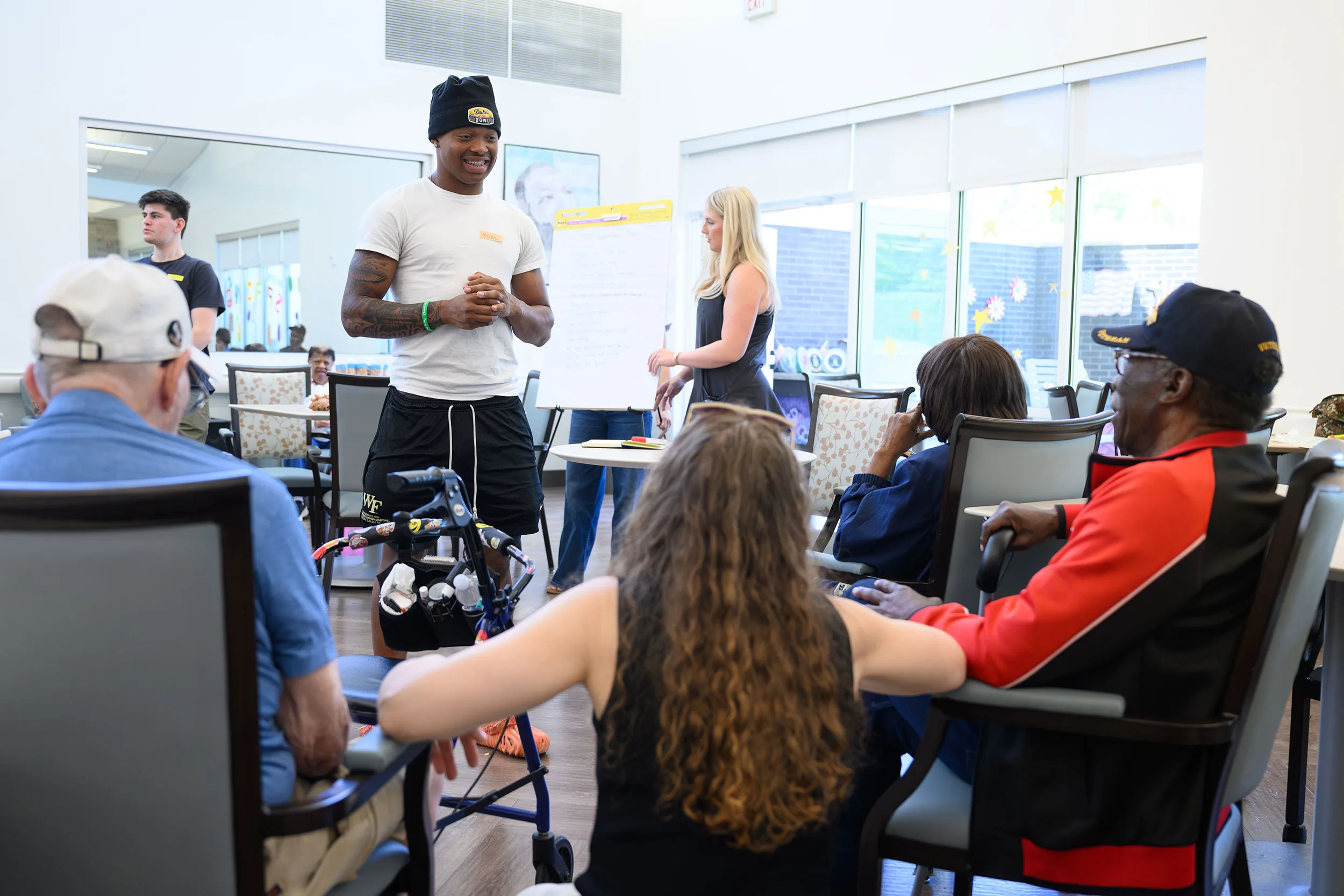
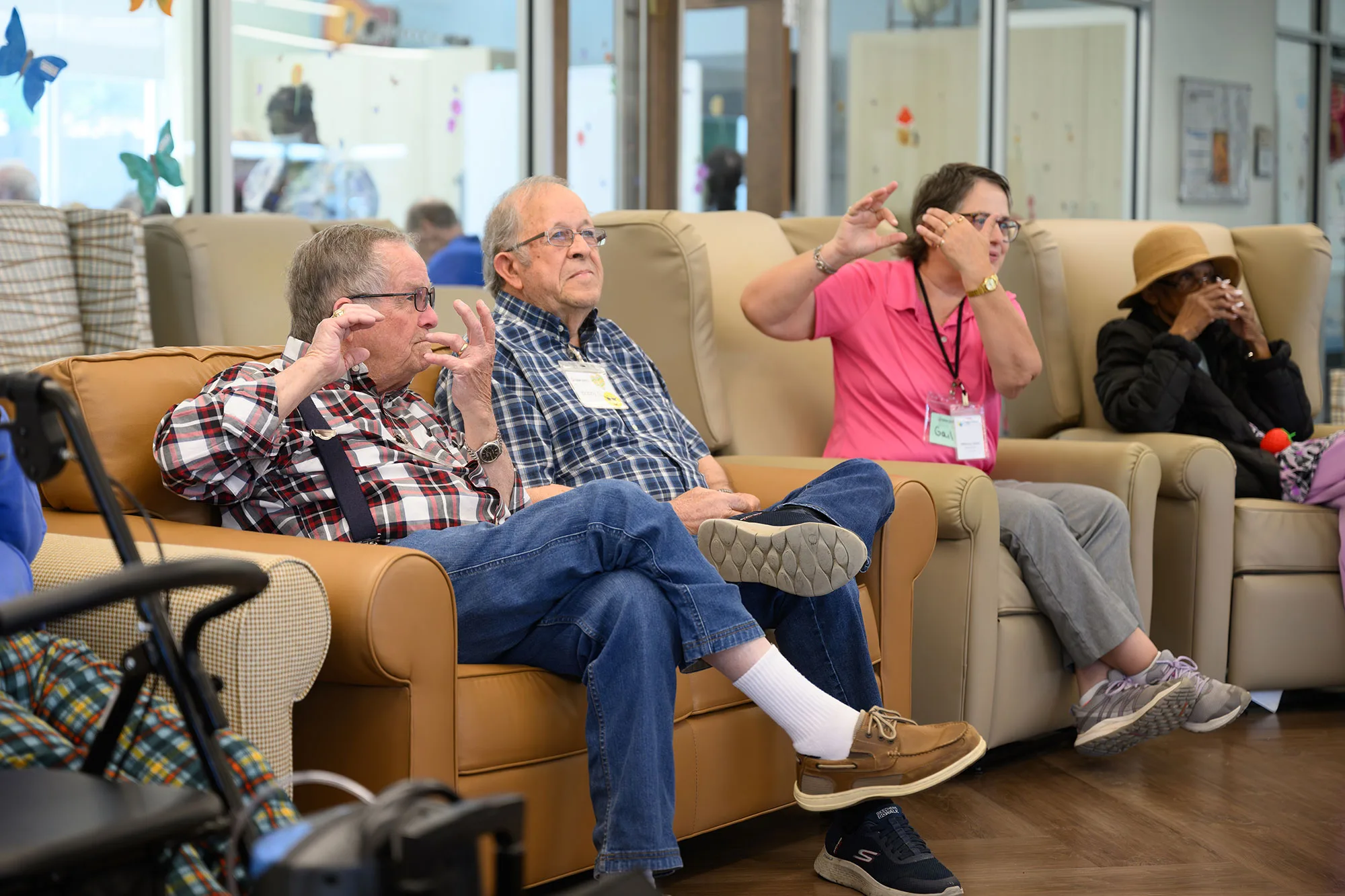
This day’s visit to the Elizabeth and Tab Williams Adult Day Center begins with a poem, “Spring” by William Blake. Five teams of Wake Forest University students spread out across the Winston-Salem center’s sunny gathering spaces, each paired with a group of the older adults who use the Williams Center’s services. In each group, a student calls out a line of poetry, and the center participants repeat them back, adding matching hand movements as they go.
Then, working together, they write their own poem about spring. And it’s medicine for these adults, most living with some level of memory loss.
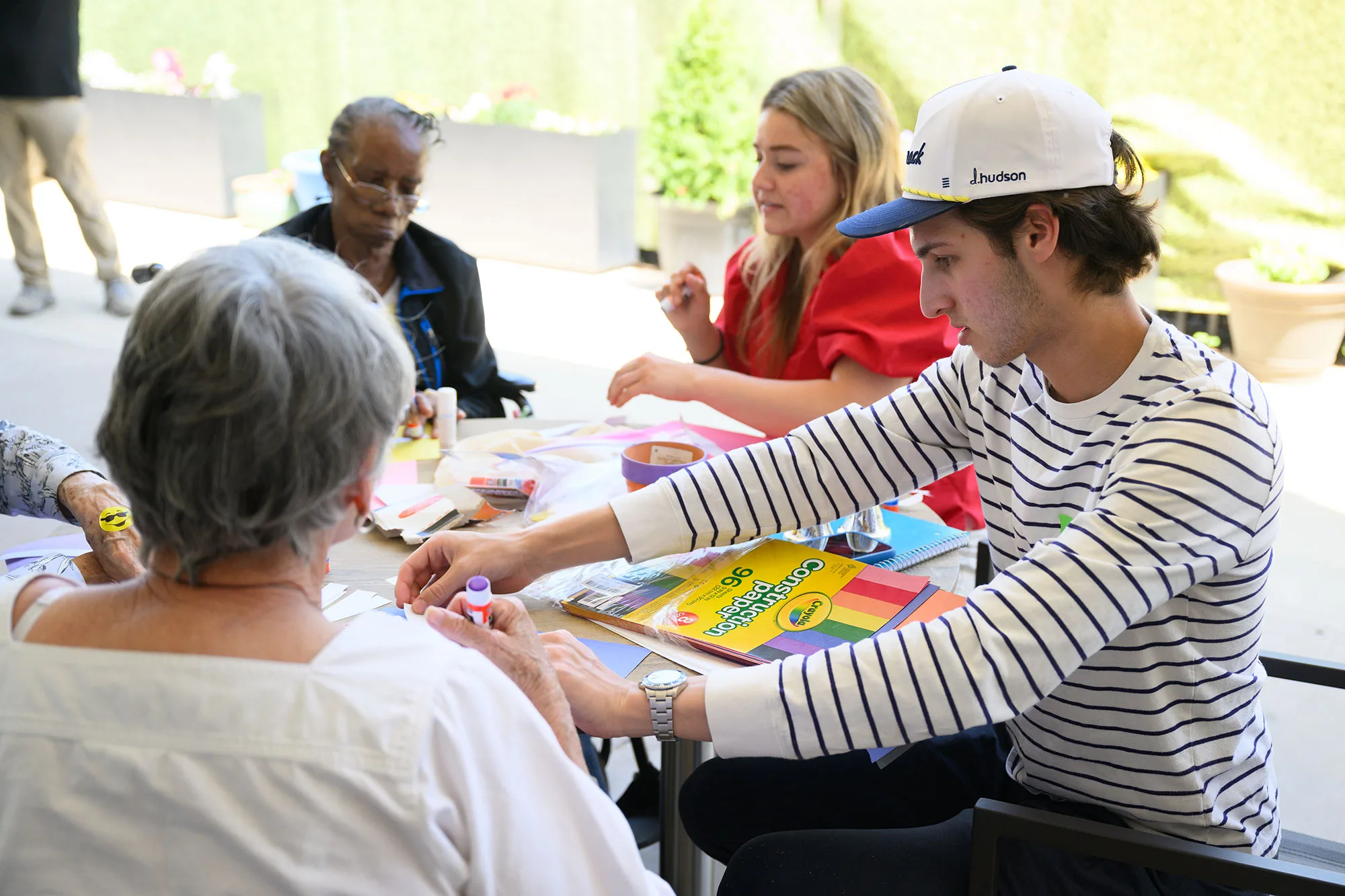
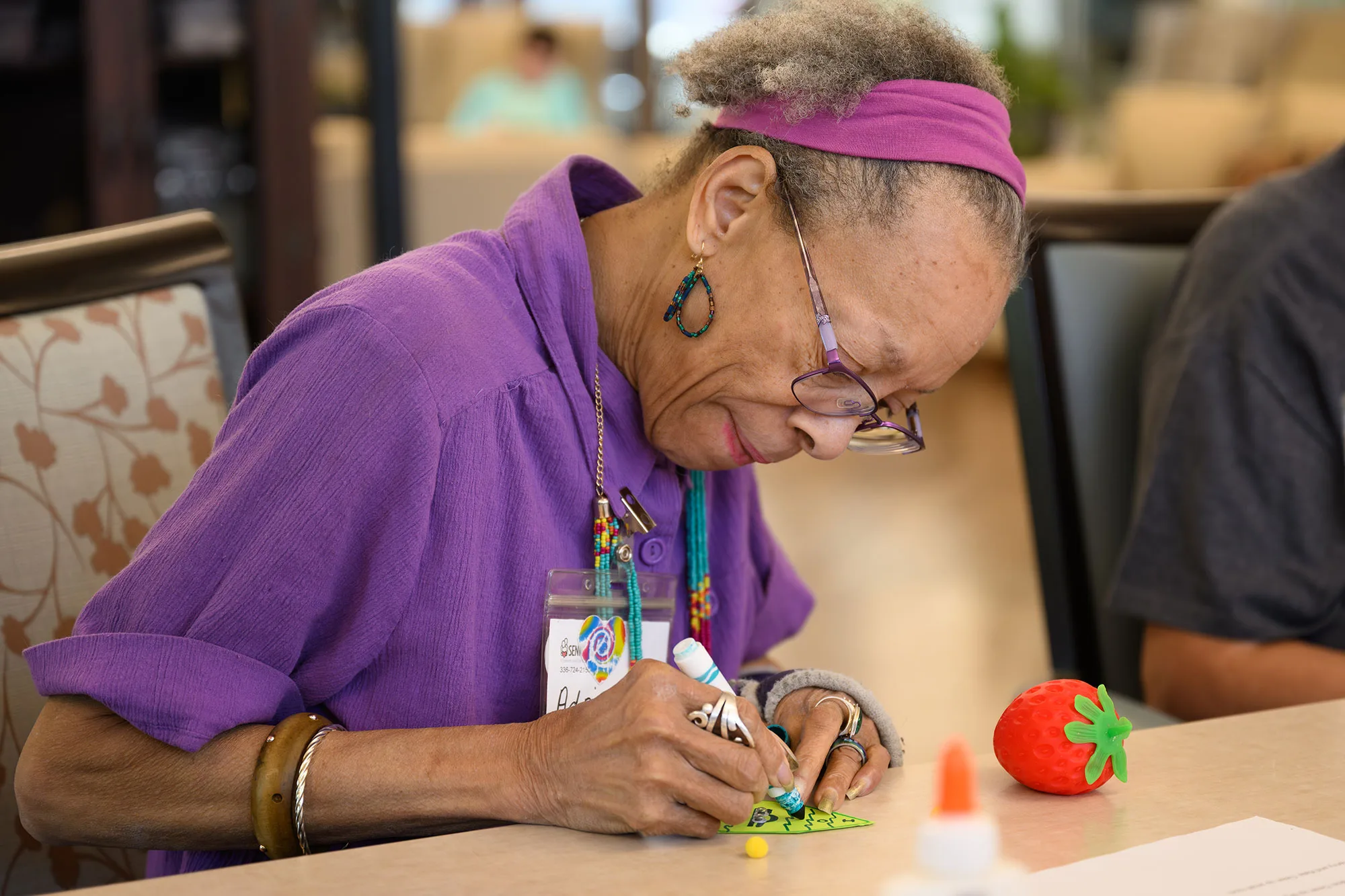
In Kate Polian’s group, the poem becomes a list of the colors and scents of the season – strawberries, blue sky, flowers. As the center’s participants call out their memories, Wake Forest first-year student Kameran Shanks offers a smile and a fist bump.
And when asked what they should name their creation, a patron named Barbara calls out, “How Beautiful We Are” and gives the students a hug.
“Odd Spring”
A different kind of spring
Tires bouncing
A different kind of spring
What it’s going to bring
Being in it, having fun
Golfing in the day, planting tulips
Roses, smoke, warmth
Birds chirping, bird watching
A different kind of spring
Baking cookies
A different kind of spring
Picking violets for Elaine
One of the poems Wake Forest students created with Williams Center patrons for the spring 2026 semester
A semester rich with monthly visits to the Williams Center has culminated in this capstone project for an Academic Community Engagement (ACE) first-year seminar called “Creative Care: Empathy and the Benefits of Community Engagement.”
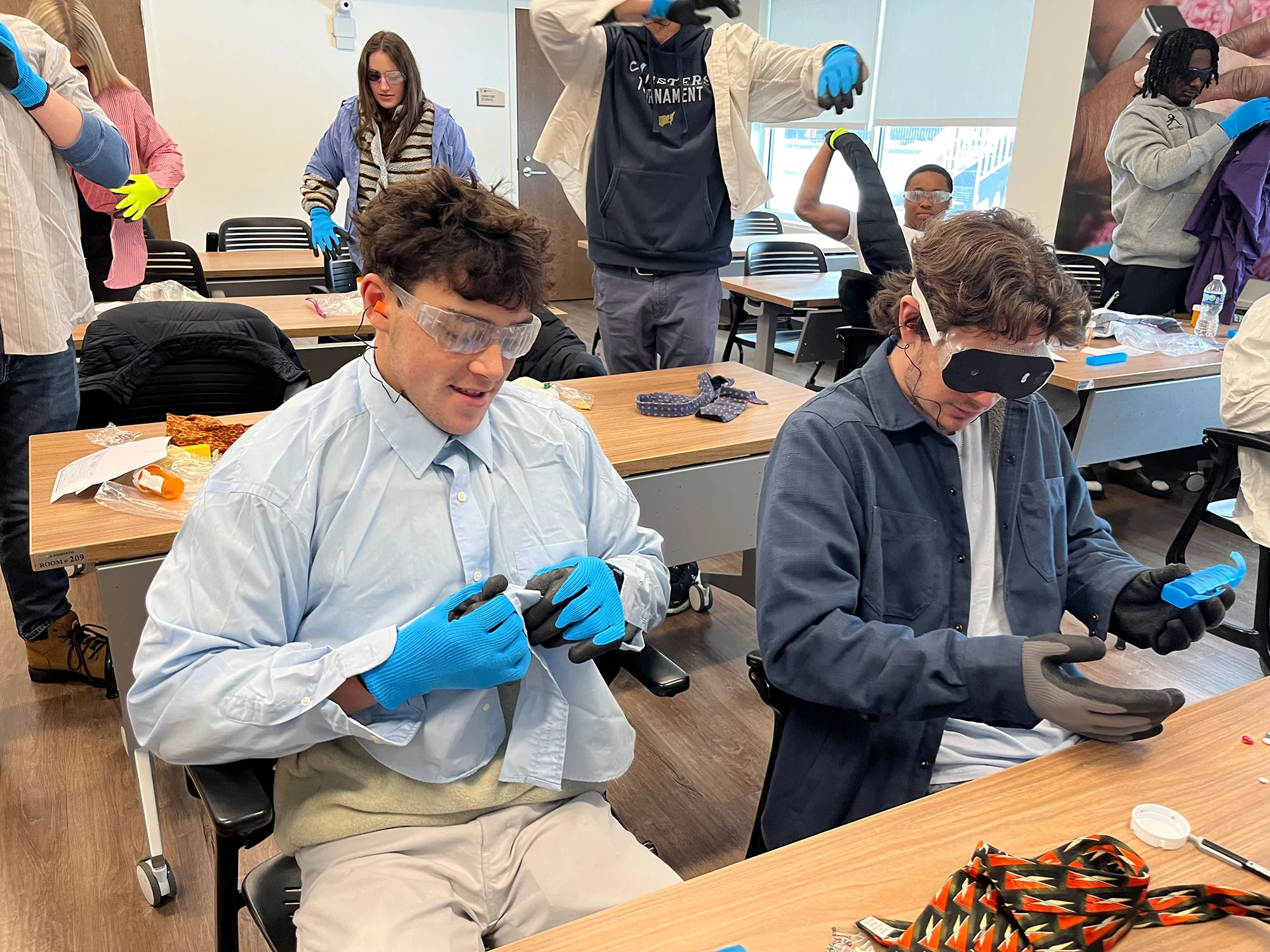
The 16 students have spent their time studying the neuroscience behind the benefits of engaging in the arts for people living with dementia. Through “empathy adventures” that mimic some of the symptoms of dementia, they have experienced in some small way the lives of the people they’re serving at the center.
The valued partnership between Wake Forest and the Williams Center has been years in the making, but the Creative Care class brought something new to the mix beginning in fall 2025: a group of young adults striving to become volunteers who work more effectively, and empathetically, with people unlike themselves.
That perfectly addresses the mission of Senior Services Inc.’s Intergenerational Center for Arts and Wellness (Generations Center), which houses the Williams Center program for older adults living with memory loss or frailty. Senior Services launched the Generations Center in 2023 to bring together generations of Winston-Salem residents to support and learn from each other.
The Wake Forest-Generations Center partnership has drawn interest from institutions nationwide, and this year it earned recognition as the 2026 Community Partner of the Year from the North Carolina Campus Engagement (NCCE) network.
‘They can understand what these folks might be going through’
For many of the students in the Creative Care first-year seminar, the Williams Center has come to feel like home. Thomas Tilton, a first-year student from Monmouth Beach, N.J., took the class in fall 2025, and he continues to volunteer twice a week.
The Williams Center provides programming and care for Forsyth County older adults. But it also offers families and caregivers a respite for up to 11 hours a day, with financial support for those who need it.
Consistent volunteers and community collaborations like the one with Wake Forest are vital to the program’s success.
Today, Tilton sits at a table in the middle of the main activity room, chatting easily with a handful of patrons about their day. He said it didn’t always feel so natural.
“Our very first day here, everyone was timid and afraid and super tight,” he explained. “But you basically let your guard down over time. It’s like exposure therapy, right? And now, I just walk in, go to anyone, sit down and have a conversation.”
Cynthia Becker, program coordinator at the Williams Center, noted that the Wake Forest student volunteers engage at a different level because of their intensive classroom training. It not only gives Williams Center patrons a richer experience, but also helps the center staff deliver better care.
“Those young adults come in here and dive right in. And they want to learn more, they want to learn new skills or develop skills that they already have,” she said. “They go through dementia sensitivity training, they go through training on aging. Because of that, I’ve started doing dementia sensitivity training with all the interns that come through, so that they can understand what these folks might be going through.”
When Tilton returns to Wake Forest from summer break, he’ll head back to the Generations Center for regular volunteer shifts.
‘How the work we do shapes our world’
Allison Walker, a poet who teaches in the College, designed this ACE seminar to take volunteering beyond episodic service and into the realm of understanding and collaborating to address systemic community issues.
It’s experiential, community-engaged learning: scholarship and volunteer work infused with a healthy dose of Pro Humanitate. The University’s motto means “For Humanity,” and it encourages all to serve as catalysts for good in the world.
The connection with the Generations Center stems from a relationship built over the past decade by Wake Forest dance professor and ACE Fellow Christina Soriano and School of Medicine researcher Christina Hugenschmidt. Funded by the National Institutes of Health, they study how improvisational dance can help improve walking and balance in people with Parkinson’s disease or cognitive decline. Some of their research has included Williams Center patrons, and they continue to conduct a weekly dance class, free and open to the public, at the Generations Center.
As director of community partnerships and experiential learning in Wake Forest’s Office of Civic and Community Engagement, Walker seeks to build relationships with what she calls “true reciprocity.” All participants give and receive in equal measure.
- The Williams Center staff models person-centered care.
- Older adults who visit the center serve as teachers, storytellers, artists and community experts.
- Students offer their time, and take the lessons learned out into the community.
“This is a high-impact practice for learning,” Walker explained. “It exponentially increases a student’s ability to gain knowledge, to retain it and to act on it in a Pro Humanitate way. These are foundational professional skills, and also human skills, that allow us to see a greater purpose in how the work we do shapes our world and impacts those around us.”
‘It’s beyond partnership. It’s true collaboration’
Relationships like the one with Walker and the Creative Care class create the magic at the Generations Center, says the leadership of Senior Services Inc. According to President T. Lee Covington, the Generations Center represents partnerships at a whole new level, with programs from a clay studio to multiple health clinics to a Head Start early childhood program to a coffee shop drawing people from every age and stage of life – by design.
“It’s really beyond partnership. It’s true collaboration,” he said. “The agencies that are engaged here are working together toward this common purpose of creating a welcoming space that brings people of different ages together on a routine basis to build relationships across generations, but also as much as possible, rooting those engagements in fun and creative, artsy ways that ultimately benefit quality of life and overall health for everyone involved.”
The work to achieve that vision is what garnered the Generations Center and Wake Forest the NCCE’s Community Partner of the Year award earlier this year.
Renee Griffin, creative aging & partnerships officer for Senior Services, put it this way: “Without other entities that are embracing this idea of the value and importance of intergenerational relationships through the lens of arts and creativity, and how that impacts our wellness, our physical, our spiritual, our emotional, our mental wellness, then the Generations Center is just a building, right?”
When Tamra Stokes visited various facilities after her mother, Carrie Stokes, showed signs of cognitive decline, the Generations Center’s focus on intergenerational programming caught her attention. As an educator, she loved seeing her mom engaged not in worksheets but in activities that used all her senses – and with people of all ages.
The first day Stokes dropped off her mom, she felt a weight lift from her shoulders.
“You need to go to the Generations Center,” she said. “This is the precedent of what needs to be in communities across the nation. It is all encompassing; it’s the all-inclusive resort for older adults. Because when you walk through those doors, you’ll feel like your cares have gone away.”
‘This has helped me connect with people better’
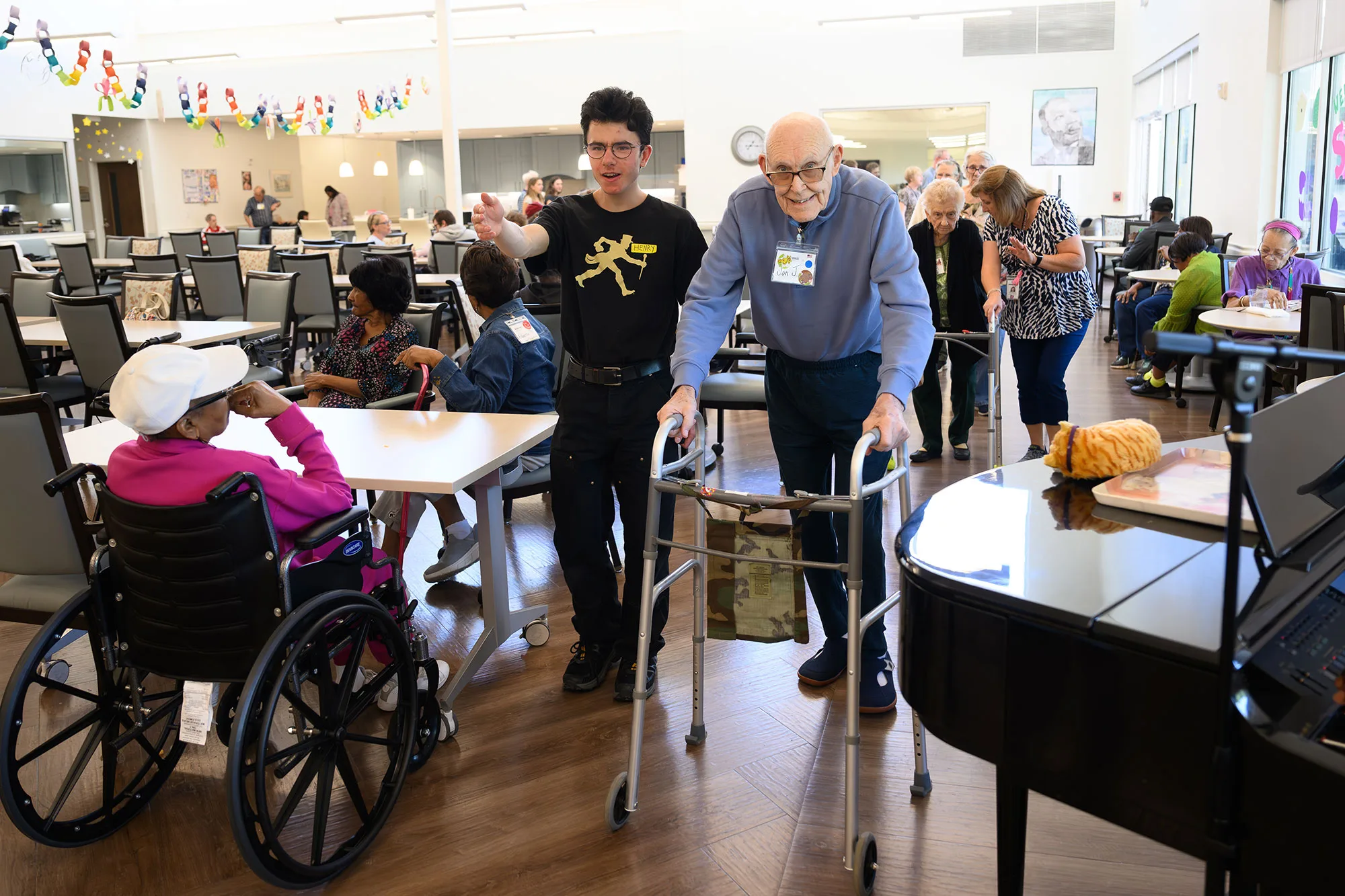
This particular week at the Williams Center, Tilton’s volunteer shift coincides with the final monthly visit of the Creative Care class. The students walk laps around the room with a few dozen patrons who are getting their post-lunch exercise. Movement helps circulate blood to the brain, keeping it healthier.
Then they break into the small groups for the capstone, based on work done by the Alzheimer’s Poetry Project. Research has shown that such interventions improve quality of life and memory recall in any stage of Alzheimer’s and dementia.
It also creates that social connection at the heart of the Generations Center’s purpose.
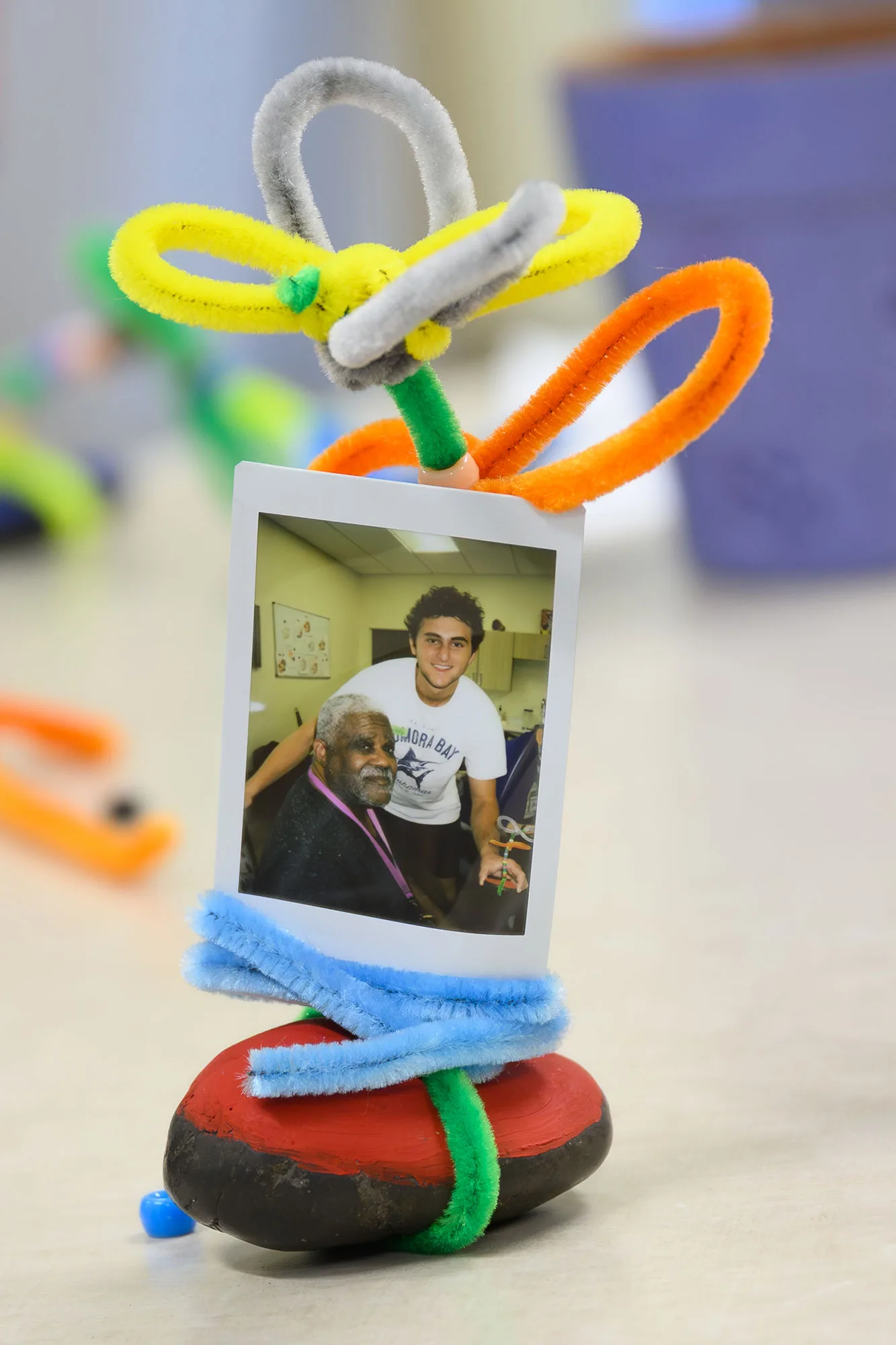
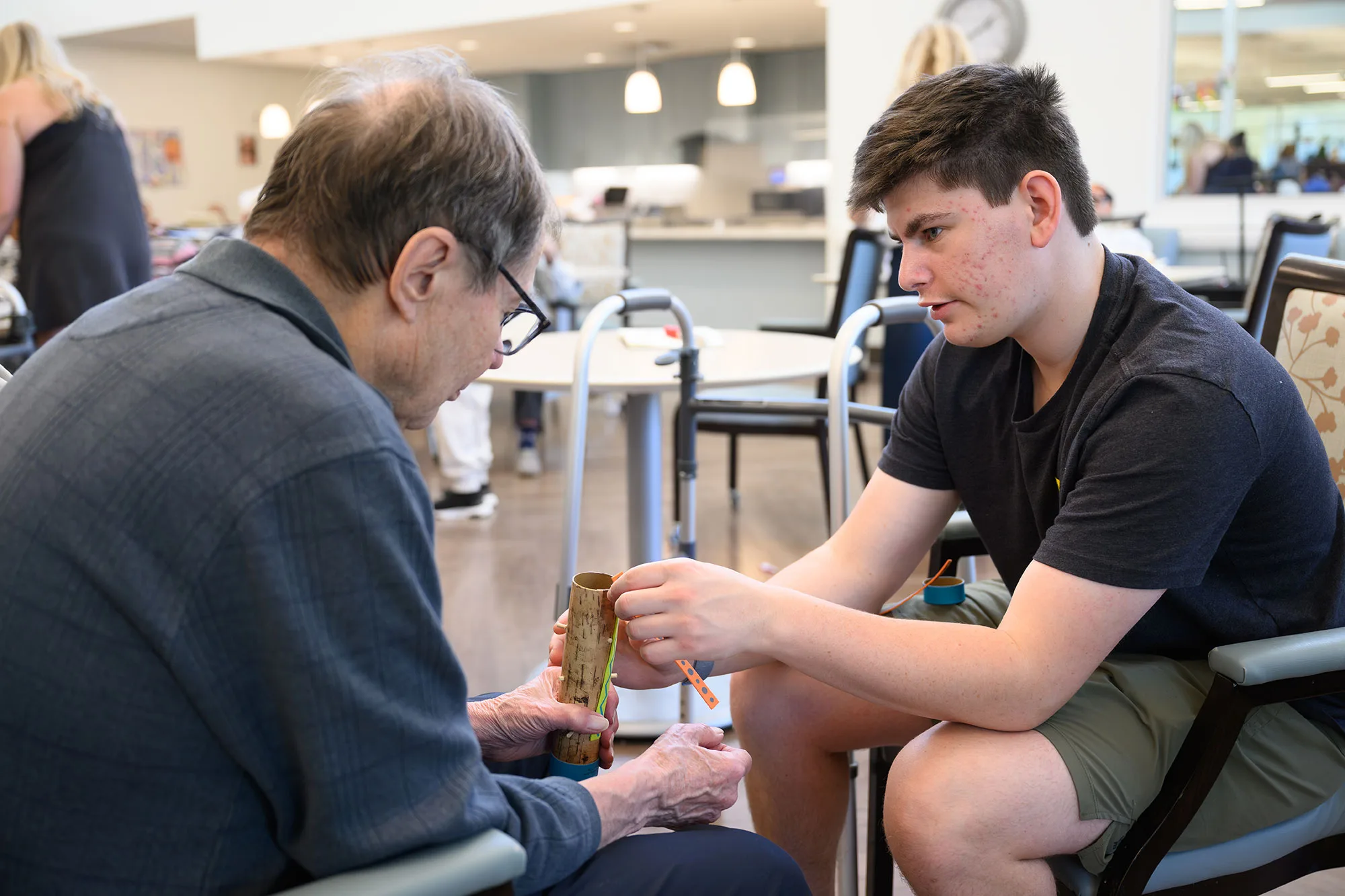
The Wake Forest students who hesitated to start a conversation with Williams Center patrons at the start of the semester now share jokes with patrons and wave their hands in the air as they recite lines of poetry about spring. They pose with patrons for Polaroid pictures. They relish new friendships.
In their end-of-semester self reflections, one student talked about how the experience helped build true empathy.
“My time at the Williams Center has made me realize there’s always more going on beneath the surface,” the student wrote. “I’ve become more patient and try to slow down before making assumptions. Instead I think about what I might be missing or not understanding. This has made me more open minded and helped me actually listen and connect with people better. Overall, I’ve learned that empathy isn’t just feeling bad for someone. Empathy is about taking the time to understand their perspective, even if it’s different from mine.”
‘A partner that the Williams Center can rely on’
Although perhaps one of the more structured volunteer opportunities the Wake Forest community undertakes at the Generations Center, Senior Services and the Williams Center, the Creative Care class is not the only one:
- Spurred by Shannon McKeen, executive director for experiential learning and innovation at the School of Business, MSBA candidates Jack Halpern and Andrew Bakker are analyzing community survey data. The results will help Senior Services better tailor and expand programs for older adults in Forsyth County.
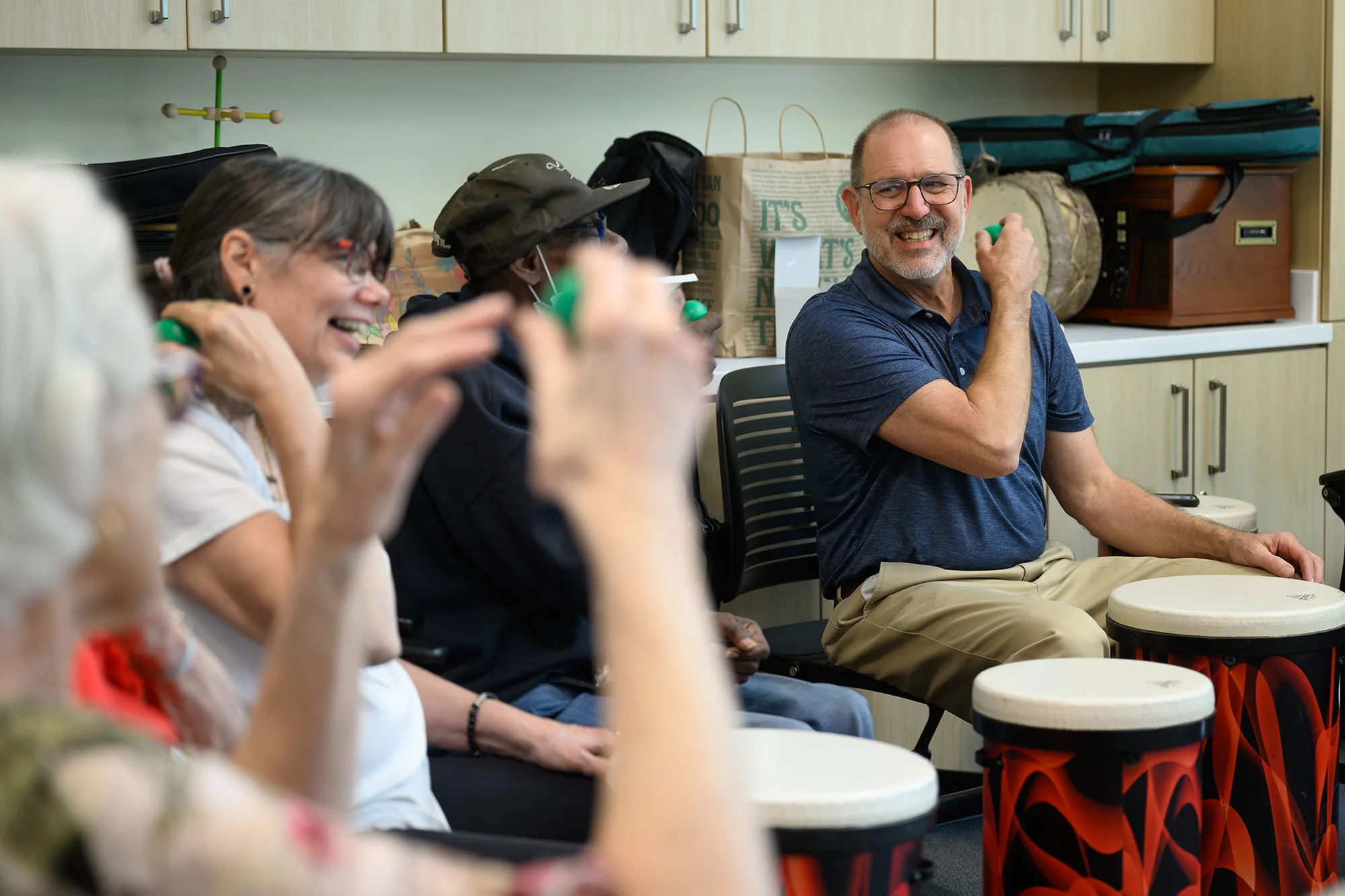
- John R. Beck, adjunct professor of percussion in the Department of Music, hauls 20-some bongo drums to the Williams Center regularly for a very lively drum circle.
- In helping his students determine their career path, ACE Fellow Brian Calhoun, associate professor of career counseling and development in the Education Department, offers them an opportunity to volunteer at the Williams Center. He himself has long volunteered with the center, as one of his research interests is people living with Alzheimer’s and caregiver stress.
Then there are the very informal connections Walker has seen blossom over the past few months.
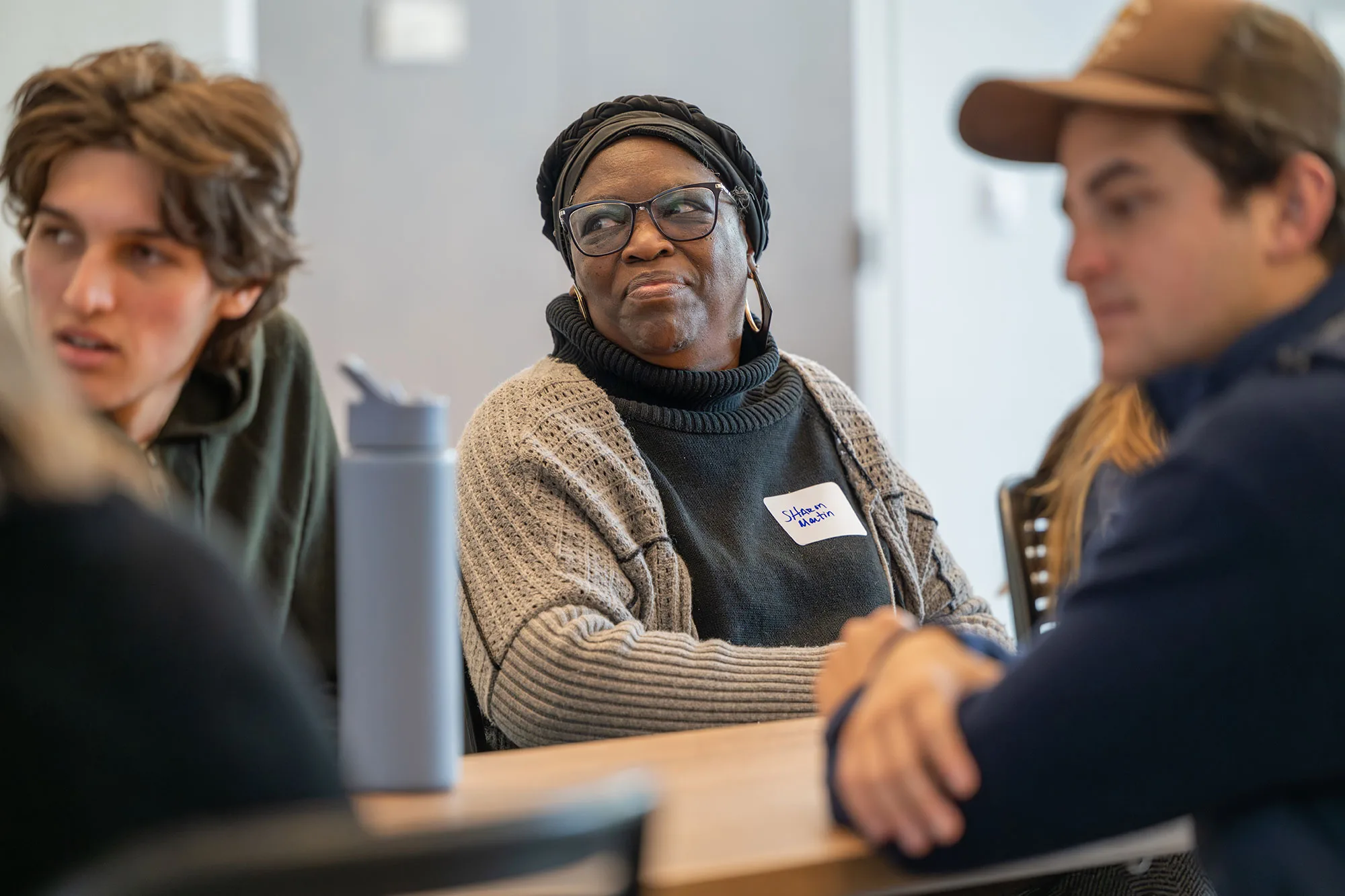
After the class participated in a roundtable discussion on ageism at the Generations Center, student Kob Adeleke-Hokes approached one of the older adults at the table to talk about her experiences. He impressed her from the start, addressing her as Miss Althea and asking about her history and career, as she was taught to do growing up. He shares a career path – electrical engineering – with her husband. And he hails from an Atlanta neighborhood near her younger brother’s home.
The shared experiences inspired Althea Taylor Jones, a retired gerontology program administrator and professor, to reach out and keep in touch with him beyond the confines of the Creative Care class.
Wake Forest will share the Generations Center partnership model first-hand July 13-17, while hosting a national research conference called the Urban Research-Based Action Network (URBAN) Summer Institute. URBAN is a national network of scholars, artists and activists who study community issues and how to work with stakeholders to address them based on research. Since this year’s summer meeting focuses on the social determinants of health, especially the arts as medicine, attendees will spend a day at the Generations Center, learning from all the partners.
Meanwhile, Walker is making plans for the next Creative Care class, which changes each semester based on student feedback.
“I plan to continue teaching this course every semester to ensure that our work is sustained and reciprocal,” she said. “Though the students may change each semester, I hope to remain a partner that the Williams Center staff can rely on to support their mission all year long.”
Get involved
How to volunteer at the Intergenerational Center for the Arts and Wellness
- See the Senior Services website for opportunities.
- At Wake Forest, log into GivePulse to find volunteer opportunities. There is a particular need for bi-lingual and other activity/social volunteers at the Williams Adult Day Center.
To learn more about everything the Generations Center has to offer, visit generationscenter.org.
Recent News
Celebrating 20 years of undergraduate research and discovery
Celebrating 20 years of undergraduate research and discovery
What the neuroscience of motivation has to say about GLP-1 drugs
What the neuroscience of motivation has to say about GLP-1 drugs