
Hold the mustard: What makes spiders fussy eaters?
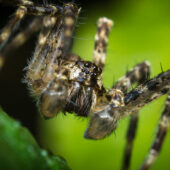 It might be one of nature’s most agile and calculating hunters, but the wolf spider won’t harm an insect that literally leaves a bad taste in its mouth, according to new research by a team of Wake Forest University sensory neuroscientists, including C.J. "Jake" Saunders.
 From the Brookstown area to Innovation Quarter, Wake Forest is making a series of moves that aim to expand the University’s engagement with the surrounding community in addition to its geographic footprint.
 The Wake Forest University Graduate School of Arts and Sciences is bringing all-star power to its new Master of Arts in Sports Storytelling when classes begin in fall 2016. Chris Webber, five-time NBA all-star, sports analyst, businessman and film producer has been named a Professor of Practice.
 A battle for evolutionary dominance is raging in Arizona between the tiger moth and the echo-locating bat. New research being done by Wake Forest shows the tiger moth currently has the upper hand.
 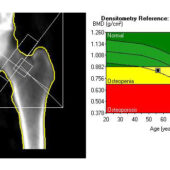 A first-of-a-kind study by Wake Forest researchers will address why long distance runners, particularly women, are more likely than athletes in other sports to develop osteoporosis later in life.
 The Hybrid Sterling Energy Generator (HySterE) panel is one of the world’s first combined photovoltaic and thermal collection generators. Developed by researchers at Wake Forest, it could transform how we use the sun’s energy.
 Janelle Leuthaeuser is on the cutting edge of biophysics. A molecular genetics and genomics Ph.D. student, she is part of a nationwide effort to create a more efficient generation of protein-based drugs.
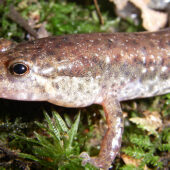 On the heels of one the worst U.S. droughts in more than half a century, a new study by Wake Forest researchers raises questions about the future of one of the most integral members of stream ecosystems throughout the Southeast – the salamander.
 Refugees, ballad singers, classic car collectors and victims of forced sterilization —Wake Forest third-year documentary film students have spent the last year working on movies that show what life is like from these different perspectives.
 For four years, graduate student Aaron Corcoran has studied how tiger moths use sonar-jamming to evade bats. With Corcoran’s help, the event has been captured on camera for National Geographic Television's “Untamed Americas.” The program will be shown again at 9 p.m., Saturday, June 16.