
First college assignment: ethics
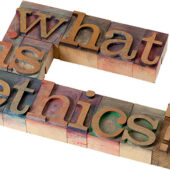 Breakthroughs in science and medicine have multiplied the ethical questions confronting this generation of college students. With its 2011 summer reading assignment, Wake Forest seeks to engage incoming students in thorny bioethics issues, while also addressing broader ethical issues in society.
Categories: Experiential Learning, University Announcements
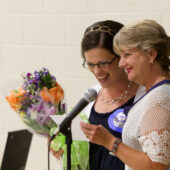 Two teachers — an elementary school teacher in Kernersville and a high school math teacher in Clemmons — have been named winners of Wake Forest University’s 2011 Marcellus Waddill Excellence in Teaching Award.
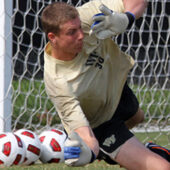 Soccer player Doug Ryan spent his summer in Vietnam, mentoring rising ninth graders on a variety of academic subjects and life skills. He also helped teach them four sports through the Coach for College program. Read more and see a slideshow from his service trip.
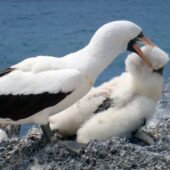 For one species of seabird in the Galápagos, the child abuse “cycle of violence” found in humans plays out in the wild. The new study of Nazca boobies by Wake Forest researchers provides the first evidence from the animal world showing those who are abused when they are young often grow up to be abusers.
 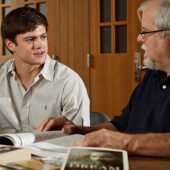 Wake Forest student William Murphy (’13) and Associate Professor of Communication John Llewellyn recently discovered that the most significant American speech in recent history was based on a teenage dream – one Dr. Martin Luther King, Jr. first envisioned and articulated as a 15-year-old schoolboy in the Jim Crow South.
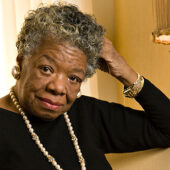 Directed by Maya Angelou, a Presidential Medal of Freedom honoree, twelve students recently shared 44 poems in a dramatic performance at Brendle Recital Hall. The poems were selected as favorites from their summer course with Angelou. (includes video)
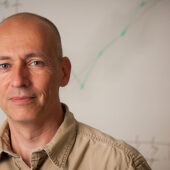 If intelligence agencies could have accurately predicted the events of 9/11, imagine how world history would have changed. Eric Stone, an associate professor of psychology, is working on a crowdsourcing project to find ways to help experts make more accurate predictions. Read media coverage of the project and find out how you can participate.
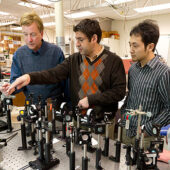 Using a crystal ball to protect homeland security might seem far-fetched, but researchers at Wake Forest University and Fisk University have partnered to develop crystals that can be used to detect nuclear threats, radioactive material or chemical bombs more accurately and affordably.
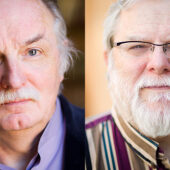 With an esteemed group of faculty, Wake Forest often is a source for the media on important news topics. Recently, professors David Coates and John Llewellyn spoke with the media about the U.S. debt ceiling debate.
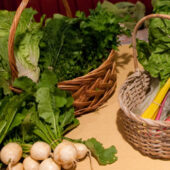 For three weeks, 23 high school students from as far away as California have been exploring challenges related to green initiatives and gaining the confidence and the tools to implement sustainable success stories at home.