Chemistry major named Goldwater Scholar
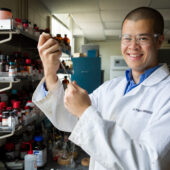
Alec Christian, a junior from Salem, Conn., who studies organic chemistry, was recently awarded a Goldwater Scholarship. Christian was selected as one of 271 math, science and engineering students from around the country to receive the award for the 2013-2014 school year.
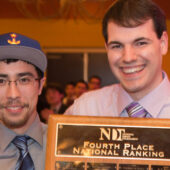
For the first time in the history of Wake Forest debate, three teams made the sweet 16 out of 78 teams in the National Debate Tournament — signalling the start of another successful chapter in a long history of winning debaters.
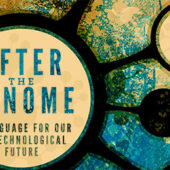
Medical advances in biotechnology seem to be coming faster than the public can understand them or even discuss how society should handle ethical, legal and moral considerations. To spark the national conversation, Wake Forest has partnered with Baylor to host “After the Genome: The Language of our Biotechnological Future” April 12-13.
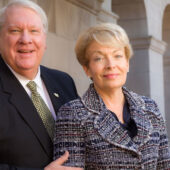
Dr. Steven and Becky Scott have committed $6.5 million to further the education of first generation college students through Wake Forest’s Magnolia Scholars program, benefiting students who are the first in their families to attend college. It is the second largest commitment to scholarships by individuals in Wake Forest’s history.
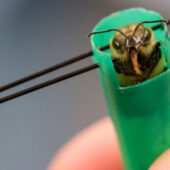
You can’t teach an old dog new tricks, but this might not be the case for a honeybee. Just ask David Hale (’15), a sophomore biology major. Hale has been studying the relationship between brain structure and cognitive function in honeybees since his freshman year.
As Congress considers comprehensive immigration reform, new research by sociologist Hana Brown shows language used in the immigration debates can be as important as the legislation. Junior Le ‘Ron Byrd works with Brown on the next phases of her research.
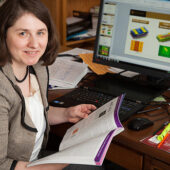
Junior physics major Maggie Payne is part of a team studying the relation between the physical structure and electrical properties of organic semiconductor crystals. Led by physicist Oana Jurchescu and supported by the National Science Foundation, the team is contributing to advances in organic semiconductor technology that could lead to video screens that bend like paper and electronics sewn into clothing.
A new study by health and exercise science professor Jeff Katula, economist Michael Lawlor and a team of Wake Forest researchers shows promise for effective lower-cost diabetes prevention programs. The results appear online in the American Journal of Preventative Medicine.
Math professor Sarah Mason teaches sustainability by the numbers. In her first-year seminar -- “Counting on Sustainable Energy: Does it Add Up?” -- students gain a greater understanding of alternative energy and learn how to critically evaluate claims about the environmental impact of fuel sources. Read more about Mason and how she combines her love of math with her passion for sustainability.
A Wake Forest professor finds the key to harmonious computer science studies is to introduce students to technology with digital audio.